
Medication profile
Citalopram and Escitalopram (Celexa is the best-known brand name. Other international names include Cipramil)
Citalopram and escitalopram are selective serotonin reuptake inhibitors, or SSRIs, used primarily to treat depression and anxiety disorders.
 Written by Sanjida Ahmed, PhD, Cellular and Molecular BiologyChief Operating Officer and Lead Scientist, Personalized Prescribing. Last reviewed October 2, 2026.
- Citalopram Brand Names
- Celexa is the best-known brand name. Other international names include Cipramil, Seropram, Citalec, Citalon and numerous generic citalopram products. Celexa remains listed by Health Canada, and generic products such as APO-Citalopram and PMS-Citalopram are also available.
- Class
- SSRI (selective serotonin reuptake inhibitor)
On this page
- What You Need to Know
- What is Citalopram Used For?
- What Is Escitalopram Used For?
- How Do Citalopram and Escitalopram Work?
- What Are the Common Side Effects of Citalopram and Escitalopram?
- Drug Interactions
- Can Citalopram or Escitalopram Be Taken in the Morning or at Night?
- Tapering and Stopping Citalopram or Escitalopram
- Frequently Asked Questions
Escitalopram Brand Names: Cipralex is the principal Canadian brand name, while Lexapro is the best-known U.S. brand. Other international brands include Cipralex, Lexapro, Elicea and numerous generic escitalopram products. Cipralex and several generic escitalopram products are marketed in Canada.
What You Need to Know
Citalopram and escitalopram are selective serotonin reuptake inhibitors, or SSRIs, used primarily to treat depression and anxiety disorders.
The two medications are very closely related chemically.
Citalopram contains two mirror-image forms of the molecule:
- S-citalopram (Escitalopram)
- R-citalopram Escitalopram is essentially the S-form of citalopram, which is primarily responsible for serotonin-reuptake inhibition.
Both medications mainly work by blocking the: Serotonin Transporter — SERT
This allows serotonin to remain available between nerve cells for longer and gradually changes serotonin signaling within brain circuits involved in:
- Mood
- Anxiety
- Emotional regulation
- Stress response
- Sleep
- Repetitive thinking Although citalopram and escitalopram are closely related, they are different medications and should not be considered interchangeable milligram-for-milligram.
Their metabolism is strongly influenced by: CYP2C19
This makes both medications particularly relevant to pharmacogenomic testing. CPIC provides CYP2C19-based prescribing recommendations for both citalopram and escitalopram.
What is Citalopram Used For?
In Canada, citalopram is primarily indicated for the treatment of:
- Depression / major depressive disorder The Canadian product information describes citalopram for symptomatic relief of depressive illness.
Citalopram may also sometimes be used off-label for certain anxiety-related conditions, depending on the patient’s clinical circumstances.
What Is Escitalopram Used For?
Escitalopram has broader approved psychiatric indications in Canada.
It is indicated in adults for:
- Major depressive disorder
- Generalized anxiety disorder
- Obsessive-compulsive disorder Canadian product information specifically includes these indications.
Depending on the country, escitalopram may also be used for other anxiety disorders.
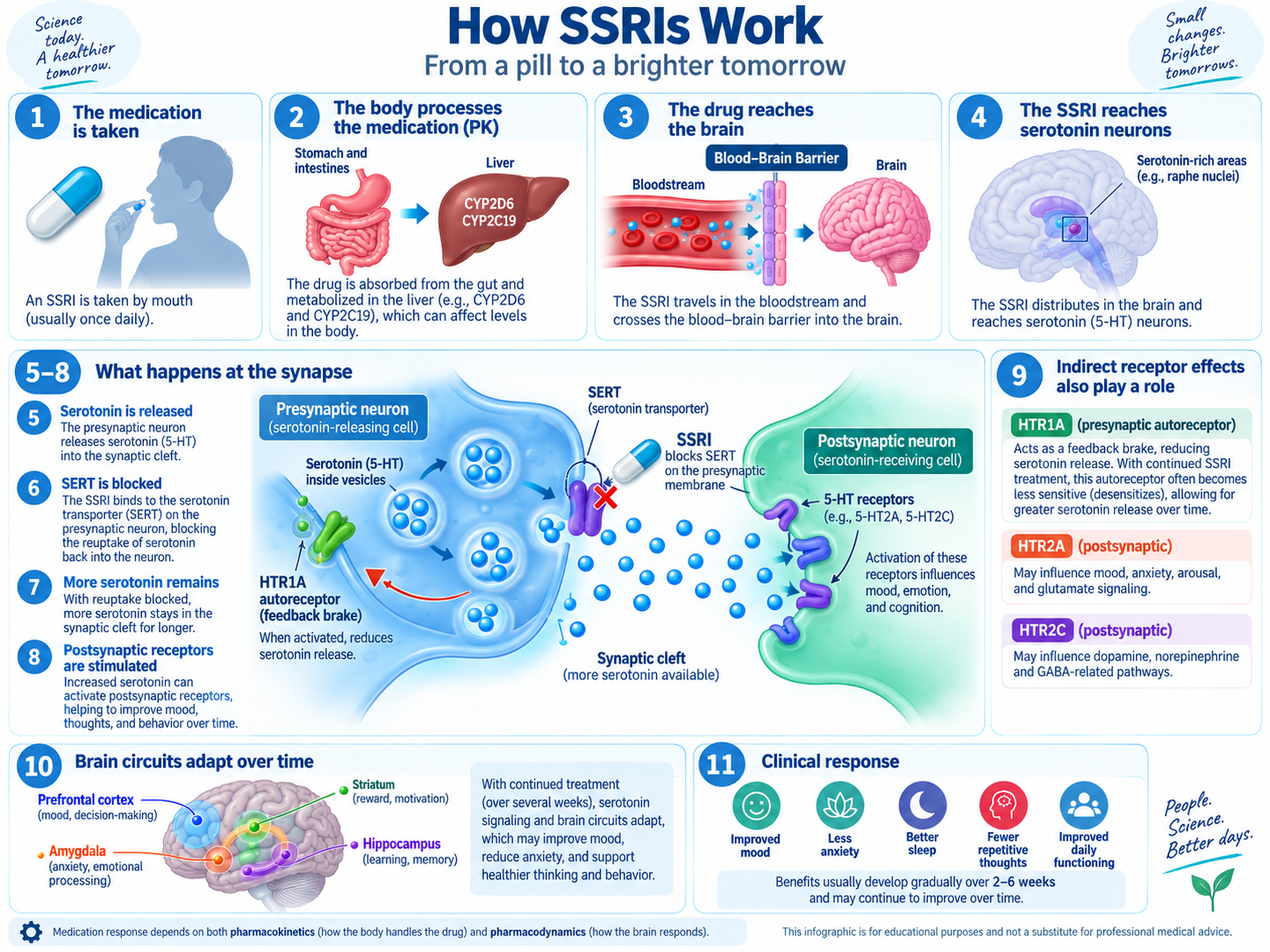
How Do Citalopram and Escitalopram Work?
Both medications are SSRIs.
Normally:
- Serotonin is released
- Serotonin communicates with receptors
- SERT transports serotonin back into the nerve cell
Citalopram and escitalopram block SERT.
Therefore:
- Citalopram / Escitalopram
- SERT inhibition
- Less serotonin is recycled immediately
- More serotonin remains available between neurons
- Serotonin signaling changes
- Brain circuits gradually adapt
- Depressive or anxiety symptoms may improve
These medications start altering serotonin transport relatively quickly, but the therapeutic effect generally takes several weeks because the brain needs time to adapt to the change in signaling.
What Are the Common Side Effects of Citalopram and Escitalopram?
Many side effects are shared because the medications have similar pharmacology.
Common side effects can include:
-
Nausea
-
Headache
-
Dry mouth
-
Increased sweating
-
Fatigue
-
Drowsiness
-
Insomnia
-
Dizziness
-
Diarrhea
-
Reduced appetite in some people
-
Restlessness or nervousness
-
Sexual side effects Sexual side effects can include:
-
Reduced libido
-
Delayed orgasm
-
Difficulty reaching orgasm
-
Delayed ejaculation
-
Erectile difficulties Some side effects are more noticeable during the first few weeks and may improve as treatment continues.
Citalopram and escitalopram increase serotonin signaling.
Using them with other medications that strongly increase serotonin can rarely cause serotonin syndrome.
Symptoms may include:
- Agitation
- Confusion
- Tremor
- Muscle twitching
- Overactive reflexes
- Sweating
- Diarrhea
- Rapid heart rate
- Fever
- Muscle rigidity Severe serotonin syndrome requires urgent medical attention.
QT Prolongation and Heart Rhythm
This is particularly important for citalopram.
Citalopram can prolong the heart’s QT interval in a dose-dependent manner.
Excessive QT prolongation can increase the risk of a rare but potentially dangerous abnormal heart rhythm called torsades de pointes.
For this reason, higher citalopram doses are restricted.
Current prescribing information recommends a maximum of:
40 mg/day for most adults
but only:
20 mg/day
for certain higher-exposure groups, including:
- CYP2C19 Poor Metabolizers
- People taking CYP2C19 inhibitors
- Patients with hepatic impairment
- Older patients according to the applicable product labeling. Escitalopram can also affect QT interval, but the concern is generally more prominent with citalopram.
Patients with:
- Congenital long-QT syndrome
- Significant heart disease
- Very slow heart rate
- Low potassium
- Low magnesium
- Other QT-prolonging medications require additional clinical consideration.
Low Sodium — Hyponatremia
SSRIs can occasionally cause abnormally low blood sodium, particularly in:
-
Older adults
-
People taking diuretics
-
People who are dehydrated
-
Patients with certain medical conditions Symptoms can include:
-
Headache
-
Confusion
-
Weakness
-
Difficulty concentrating
-
Unsteadiness Severe cases can cause seizures.
-
Bleeding Risk Serotonin participates in platelet function.
SSRIs can therefore increase bleeding tendency, particularly when combined with:
-
Aspirin
-
Ibuprofen
-
Naproxen
-
Other NSAIDs
-
Warfarin
-
Apixaban
-
Rivaroxaban
-
Other anticoagulants or antiplatelet medications This does not mean these combinations can never be used, but the overall bleeding risk should be considered.
-
Mania or Hypomania Like other antidepressants, citalopram and escitalopram can sometimes trigger mania or hypomania, particularly in people with bipolar disorder.
Symptoms can include:
- Unusually elevated mood
- Greatly increased energy
- Reduced need for sleep
- Racing thoughts
- Increased activity
- Impulsive or risky behaviour Screening for bipolar disorder is recommended before antidepressant treatment.
Drug Interactions
- MAO Inhibitors — Contraindicated
Examples include:
- Phenelzine
- Tranylcypromine
- Isocarboxazid
- Certain uses of selegiline Combining an MAOI with citalopram or escitalopram can cause serious serotonergic reactions.
At least 14 days should generally separate stopping an MAOI and starting citalopram or escitalopram, and at least 14 days should usually pass after stopping either SSRI before beginning an MAOI.
- Other Serotonergic Medications
Examples include:
- Other SSRIs
- SNRIs
- Tricyclic antidepressants
- Tramadol
- Certain opioids
- Triptans
- Buspirone
- Lithium
- St. John’s Wort Combining serotonergic medications can increase the risk of serotonin syndrome.
Importantly, citalopram and escitalopram should not be taken together, because escitalopram is the active S-enantiomer contained within citalopram and the combination would unnecessarily increase serotonergic exposure. Canadian escitalopram information specifically lists concomitant citalopram as inappropriate.
- Omeprazole and Other CYP2C19 Inhibitors
CYP2C19 is particularly important for metabolism of both medications.
Examples of CYP2C19 inhibitors include:
- Omeprazole
- Esomeprazole
- Cimetidine
- Some other medications that inhibit CYP2C19 The interaction can result in:
- CYP2C19 inhibition
- Slower citalopram or escitalopram metabolism
- Higher drug exposure
- Potentially greater risk of side effects
For Canadian escitalopram labeling, patients taking cimetidine, omeprazole or other CYP2C19 inhibitors are generally advised to use a lower dose range, with a maximum of 10 mg/day.
For citalopram, CYP2C19 inhibition is particularly important because higher exposure can also increase QT-prolongation risk.
Drugs That Prolong the QT Interval
Extra caution is needed with medications that themselves prolong QT interval.
Combining multiple QT-prolonging medications can increase the risk of abnormal heart rhythm.
The risk is especially relevant for citalopram and should be evaluated using the patient’s:
- Other medications
- Heart history
- Electrolyte levels
- Age
- Dose
- CYP2C19 status
NSAIDs, Aspirin and Anticoagulants
Examples include:
- Ibuprofen
- Naproxen
- Aspirin
- Warfarin
- Apixaban
- Rivaroxaban These medications can increase bleeding risk when combined with SSRIs.
Patients should tell their healthcare professional about unusual:
- Bruising
- Nosebleeds
- Gastrointestinal bleeding
- Black stools
- Other abnormal bleeding Dosage
Dosage differs between citalopram and escitalopram.
- Citalopram Dosage For most adults treated for depression:
Starting dose
20 mg once daily
The dose may be increased after at least one week if needed.
Maximum
40 mg/day
Doses above 40 mg/day are not recommended because of QT-prolongation risk.
Lower-dose groups
Canadian and U.S. prescribing information recommends lower dosing for patients such as:
- CYP2C19 Poor Metabolizers
- Older adults
- Patients with hepatic impairment
- Patients taking CYP2C19 inhibitors A common recommendation in these circumstances is:
Starting dose: 10 mg/day
with a:
Maximum of 20 mg/day
because increased drug exposure may increase QT-related risk.
- Escitalopram Dosage For most adults:
Usual starting dose
10 mg once daily
Depending on response and tolerability:
Maximum: 20 mg/day
Canadian escitalopram labeling also allows starting at 5 mg/day when sensitivity to adverse effects is a concern.
CYP2C19 Poor Metabolizers
Canadian prescribing information recommends:
- Start: 5 mg/day
- If needed and tolerated:
Maximum: 10 mg/day
Older Adults
Canadian guidance similarly recommends:
5 mg/day initially
with an increase to:
10 mg/day
if clinically appropriate.
Can Citalopram or Escitalopram Be Taken in the Morning or at Night?
Yes. Both are usually taken once daily.
The best time can depend on the individual response.
If the medication causes:
Sleepiness → evening may be preferable
If it causes:
Insomnia or activation → morning may be preferable
Escitalopram can be taken once daily in either the morning or evening, with or without food.
Consistency from day to day is generally helpful.
Tapering and Stopping Citalopram or Escitalopram
Citalopram and escitalopram should generally not be stopped abruptly after regular use.
Stopping suddenly can cause SSRI discontinuation symptoms.
These can include:
- Dizziness
- Nausea
- Headache
- Anxiety
- Irritability
- Sleep disturbance
- Vivid dreams
- Sweating
- Flu-like symptoms
- Tingling or unusual sensory sensations
- “Electric shock” sensations
- Emotional instability Canadian escitalopram prescribing information recommends reducing the dose gradually over several weeks rather than abruptly.
Citalopram prescribing information similarly recommends gradual dose reduction whenever possible.
There is no single taper appropriate for everyone.
The taper may need to be slower when someone:
- Has taken the medication for years
- Takes a higher dose
- Has previously had withdrawal symptoms
- Develops symptoms during dose reduction Very small dose reductions near the end of treatment may sometimes be easier to tolerate than large reductions.
Frequently Asked Questions
Are Citalopram and Escitalopram the Same Medication?
No, but they are extremely closely related.
Citalopram contains both an S-isomer and an R-isomer.
Escitalopram contains only the S-isomer, which is primarily responsible for serotonin-transporter inhibition.
Is Celexa Citalopram?
Yes.
Celexa is the best-known brand name for citalopram.
Is Lexapro the Same as Escitalopram?
Yes.
Lexapro is the best-known U.S. brand name for escitalopram.
In Canada, the original brand is Cipralex.
- Are Cipralex and Lexapro the Same Medication? Yes.
Both contain escitalopram.
Are Citalopram and Escitalopram SSRIs?
Yes.
Both are selective serotonin reuptake inhibitors.
Do Citalopram and Escitalopram Increase Serotonin?
They inhibit the serotonin transporter, reducing serotonin reuptake and allowing serotonin to remain available between nerve cells for longer.
The therapeutic effect involves subsequent adaptation of serotonin receptors and neural circuits rather than simply “more serotonin.”
Which Is Stronger: Citalopram or Escitalopram?
Escitalopram contains the pharmacologically active S-enantiomer of citalopram and is therefore used at approximately half the milligram dose.
For example, common therapeutic doses are:
Citalopram: 20–40 mg/day
versus
Escitalopram: 10–20 mg/day
This does not mean one is universally “better” or more effective for every patient.
Is Escitalopram Used for Anxiety?
Yes.
In Canada, escitalopram is approved for generalized anxiety disorder as well as major depressive disorder and OCD.
Can Citalopram Be Used for Anxiety?
It may sometimes be prescribed for anxiety disorders, but its principal Canadian approved indication is depression.
Which Has More Risk of QT Prolongation?
Both can affect QT interval, but citalopram has the more prominent dose-related QT warning and stricter dose limitations.
This is one reason CYP2C19 Poor Metabolizer status is particularly important for citalopram.
Do Citalopram and Escitalopram Cause Sexual Side Effects?
They can.
Sexual dysfunction is a recognized SSRI adverse effect and can include reduced libido, delayed orgasm, difficulty reaching orgasm or delayed ejaculation.
Do Citalopram and Escitalopram Cause Weight Gain?
Weight changes can occur during treatment, although the amount varies greatly among individuals and may also depend on duration of treatment, appetite changes and improvement in depression.
Do Citalopram and Escitalopram Make You Sleepy?
They can cause drowsiness in some people.
Other people experience the opposite effect—activation or insomnia.
This is why timing may be individualized.
How Long Do Citalopram and Escitalopram Take to Work?
Some symptoms may begin improving within the first few weeks, but the full antidepressant or anti-anxiety effect commonly develops over several weeks.
Can Omeprazole Affect Citalopram or Escitalopram?
Yes.
Omeprazole inhibits CYP2C19, an important metabolic pathway for both drugs.
This can increase medication exposure. Canadian labeling specifically recommends lower dose limits when relevant CYP2C19 inhibitors are being taken.
Which Gene Is Most Important for Citalopram and Escitalopram?
For clinically established pharmacokinetic pharmacogenomics:
CYP2C19
is the most important gene.
Can CYP2C19 Genetics Affect Side Effects?
Yes.
CYP2C19 Poor Metabolizers can have higher citalopram and escitalopram exposure and therefore a greater probability of concentration-related adverse effects.
This is particularly important with citalopram because increased exposure can increase QT-prolongation risk.
Can CYP2C19 Genetics Affect Whether the Medication Works?
Yes.
Rapid and Ultrarapid Metabolizers may have lower concentrations of citalopram or escitalopram, which can reduce the probability of clinical benefit.
CPIC therefore recommends considering an antidepressant that is not predominantly metabolized by CYP2C19 in these patients, particularly when response is inadequate.
Can Citalopram or Escitalopram Fail Even if CYP2C19 Is Normal?
Yes.
CYP2C19 primarily answers:
How does the body handle the medication?
It does not completely answer:
How does the brain respond to the medication?
A person can have normal drug metabolism and still experience inadequate response because antidepressant response also depends on:
- Serotonin transport
- Serotonin receptors
- Other neurotransmitter systems
- Symptoms
- Diagnosis
- Dose
- Other medications
- Individual brain biology
Should I Change My Dose Based on My CYP2C19 Result?
No patient should change their dose independently.
CYP2C19 results should be interpreted by a qualified healthcare professional together with:
- Current dose
- Age
- Liver function
- Other medications
- Side effects
- Treatment response
- Heart rhythm risk
- Other clinical factors
Do Citalopram and Escitalopram Need to Be Tapered?
Usually yes.
Both medications should generally be reduced gradually rather than stopped abruptly because discontinuation symptoms can occur.
Canadian escitalopram information recommends tapering over several weeks, with the pace individualized according to symptoms and clinical circumstances.
Can Pharmacogenomic Testing Tell Me Whether Citalopram or Escitalopram Will Work?
Not with certainty.
However, CYP2C19 testing can provide clinically useful information about whether a person is likely to have:
Too little exposure
or
Higher-than-expected exposure
to citalopram or escitalopram.
That information may help a healthcare professional choose a medication, select a dose or explain unexpected side effects or treatment failure.
Why Pharmacogenomic Testing May Matter?
Citalopram and escitalopram provide a clear example of an established antidepressant pharmacogenomic relationship:
- CYP2C19 genetics
- CYP2C19 enzyme activity
- Citalopram / escitalopram metabolism
- Drug exposure
- Potential effectiveness and side-effect risk
For example:
Rapid or Ultrarapid Metabolizer
- Faster metabolism
- Lower drug exposure
- Potentially inadequate response
while:
Poor Metabolizer
- Slower metabolism
- Higher drug exposure
- Potentially more adverse effects
CPIC provides specific CYP2C19 recommendations for both medications.
But metabolism is only one part of treatment response.
PK — Pharmacokinetics
Does an appropriate amount of citalopram or escitalopram reach the brain?
The key pharmacogenomic gene here is:
CYP2C19
PD — Pharmacodynamics
Does the serotonin system respond appropriately once the medication reaches the brain?
Relevant biology includes:
- SERT
- 5-HT1A feedback
- 5-HT2A / 5-HT2C and other serotonin receptors
- Changes in serotonin signaling
- Clinical response
Both drug exposure and brain response can contribute to whether treatment is effective and well tolerated.
References
- [https://health-products.canada.ca/noc-ac/nocInfo?no=37752)
- [https://health-products.canada.ca/dpd-bdpp/info?code=63076&lang=eng&lang=eng)
- [https://files.cpicpgx.org/data/guideline/publication/serotonin_reuptake_inhibitor_antidepressants/2023/37032427.pdf)
- [https://pdf.hres.ca/dpd_pm/00001469.PDF)
- [https://dailymed.nlm.nih.gov/dailymed/drugInfo.cfm?setid=a26772e7-6e4d-489b-bb5e-5bc322ef6dfe)
This article is educational. It does not diagnose, and it does not replace advice from your prescriber or pharmacist. Never start, stop or change a medication based on a web page.