
Genetics
What Are Brain Receptor Genes?
Brain receptor genes are the targets of the psychiatric drugs. The target receptors (genes) influence how your brain and body respond to a medication.
 Written by Sanjida Ahmed, PhD, Cellular and Molecular BiologyChief Operating Officer and Lead Scientist, Personalized Prescribing. Last reviewed October 2, 2026.
On this page
- Pharmacokinetic genes
- Pharmacodynamic genes
- Why Do Pharmacodynamic Genes Matter?
- Think of Receptors as Locks
- Serotonin Genes
- Dopamine Genes
- A Simple Example with Antipsychotics
- Norepinephrine Genes
- Why Can Two People Process a Drug Normally but Respond Differently?
- Person A
- Person B
- Pharmacokinetics and Pharmacodynamics Work Together
- Step 1 — Can the medication reach the right level?
- An Easy Analogy
- How Can Pharmacodynamic Genetics Help?
- An Important Limitation
- Simple Summary
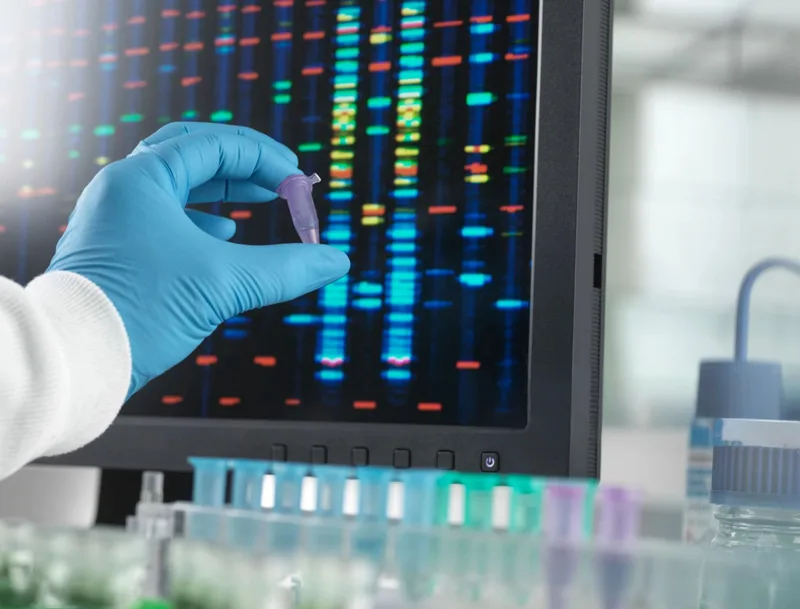
Brain receptor genes are the targets of the psychiatric drugs. The target receptors (genes) influence how your brain and body respond to a medication.
While liver enzymes (pharmacokinetic genes) tell us how the body processes a medication, brain receptor genes are more about what happens after the medication reaches its target and are also known as pharmacodynamic genes.
A simple way to think about it is:
Pharmacokinetic genes
What your body does to the medication
Pharmacodynamic genes
How your brain and body respond to the medication
Why Do Pharmacodynamic Genes Matter?
Mental health medications work by acting on brain systems involving chemicals such as:
-
GABA These medications often work by interacting with one or more of the followings:
-
Transporters- which move brain chemicals between nerve cells
-
Receptors- which receive the chemical message Genes provide the instructions for making these transporters and receptors.
Small genetic differences may affect how active or sensitive these systems are.
This may help explain why two people can:
- Take the same medication
- Have similar medication levels in their body
- but:
One improves while the other does not.
Think of Receptors as Locks
A simple example is to think of a receptor as a: Lock
and a brain chemical or medication as the: Key
Genes help determine how those locks are made and how they function.
Small genetic differences may mean that a receptor is:
- More active
- Less active
- More sensitive
- Less sensitive This can influence how strongly a person responds when a medication acts on that receptor.
Serotonin Genes
Many antidepressants work mainly through the serotonin system.
Genes can influence parts of this system, including:
The serotonin transporter
The serotonin transporter helps recycle serotonin after it has been released.
The gene that helps make this transporter is called: SLC6A4
Genetic differences in SLC6A4 may influence how the serotonin transporter functions.
Because SSRIs such as sertraline, escitalopram, citalopram, fluoxetine and paroxetine
work by blocking this transporter, researchers have studied whether these genetic differences affect antidepressant response.
Serotonin Receptor Genes
Serotonin sends its messages through several different receptors.
The following genes help make different serotonin receptors:
- HTR1A
- HTR2A
- HTR2C
- HTR3A/B
- HTR7 Genetic differences may influence how these receptors respond to serotonin and to medications.
This could potentially affect:
- Mood
- Anxiety
- Emotional regulation
- Side effects
- Medication response However, these genes should not be used alone to decide whether an antidepressant will work. Their clinical importance is still being studied.
Dopamine Genes
Dopamine is important for:
-
Motivation
-
Reward
-
Pleasure
-
Attention
-
Movement Many medications used for the following conditions affect dopamine:
-
ADHD
-
Schizophrenia
-
Bipolar disorder
-
Depression Genes involved in the dopamine system include:
-
DRD2- which helps make the dopamine D2 receptor,
-
SLC6A3- which helps make the dopamine transporter. Genetic differences in these systems may influence how strongly someone responds to medications that increase or block dopamine activity.
A Simple Example with Antipsychotics
Many antipsychotic medications work by reducing activity at: Dopamine D2 receptors
If people naturally have differences in how their dopamine receptor’s function, it is reasonable that their response to the same medication may also differ.
One person may:
Respond well at a relatively low exposure
while another may:
Need a different medication or experience more side effects.
Research is investigating whether dopamine receptor genes can help explain some of these differences.
Norepinephrine Genes
Norepinephrine helps regulate:
- Attention
- Alertness
- Energy
- Stress responses Several ADHD and antidepressant medications affect the norepinephrine system.
For example:
- SLC6A2- helps make the norepinephrine transporter. This transporter is targeted by medications such as atomoxetine and indirectly by several antidepressants.
- ADRA2A- helps make an important norepinephrine receptor involved in attention and prefrontal brain function. Researchers are studying whether differences in these genes affect how patients respond to ADHD and other psychiatric medications.
Why Can Two People Process a Drug Normally but Respond Differently?
Imagine two people take the same antidepressant.
Both metabolize it normally.
Both have approximately the expected amount of medication reaching the brain.
But:
Person A
- The medication's target system responds well.
- Symptoms improve
Person B
- The medication reaches the brain normally, but the target system responds differently.
- Little improvement or more side effects
This is where pharmacodynamic differences may help explain part of the story.
Pharmacokinetics and Pharmacodynamics Work Together
The best way to understand medication response is to look at both.
Step 1 — Can the medication reach the right level?
This is largely: Pharmacokinetics
- Genes may affect how quickly the medication is broken down.
- Step 2 — Once it gets there, does the target respond well?
This is: Pharmacodynamics
- Genes may influence receptors, transporters and other brain pathways.
- Overall medication response
An Easy Analogy
Think of medication treatment as sending a message to someone’s house.
Pharmacokinetic genes determine:
-
How quickly the package gets there and
-
How much arrives. Pharmacodynamic genes determine:
-
What happens when the person opens the package. The medication may arrive perfectly, but that does not guarantee the brain will respond to it in the same way in every person.
How Can Pharmacodynamic Genetics Help?
Pharmacodynamic information may eventually help answer questions such as:
-
Does this person’s biology appear well suited to the way this medication works?
-
Are there genetic differences in the receptors or transporters the medication acts on?
-
Could another medication mechanism make more sense?
-
Why might a medication have failed even though it was metabolized normally? This information may be especially useful when combined with:
-
Symptoms
-
Pharmacokinetic genetics
-
Previous medication response
-
Side-effect history
-
Clinical judgment More personalized medication selection
An Important Limitation
Pharmacodynamic genetics is promising, but it is generally less established than pharmacokinetic genetics.
For several metabolism genes, such as CYP2D6 and CYP2C19, there are well-established prescribing recommendations for certain medications.
For many receptor and transporter genes, the research is still developing.
This means a pharmacodynamic gene should usually be considered: one piece of information
rather than a guarantee that a medication will work or fail.
Simple Summary
Pharmacodynamic genes may influence how your brain responds to a medication. They help shape receptors, transporters and other systems involving serotonin, dopamine and norepinephrine—the same systems targeted by many mental health medications. Genetic differences may help explain why a medication works well for one person but not another, even when both people process the drug normally. Pharmacodynamic information can add another layer to personalized prescribing, but many of these genetic associations are still being studied and should be considered together with symptoms, medication history and clinical judgment.