
Medication profile
Lithium
Lithium is one of the longest-established treatments for:
 Written by Sanjida Ahmed, PhD, Cellular and Molecular BiologyChief Operating Officer and Lead Scientist, Personalized Prescribing. Last reviewed October 2, 2026.
- Common Canadian forms
- Lithium carbonate
- Class
- Antipsychotic
On this page
- What You Need to Know About Lithium
- Bipolar Disorder
- How Does Lithium Work?
- What Is Lithium Used For?
- Bipolar Disorder
- Acute Mania
- Lithium for Long-Term Bipolar Disorder Treatment
- Is Lithium Used for Depression?
- As augmentation for treatment-resistant depression
- Is Lithium an Antipsychotic?
- Is Lithium an Antidepressant?
- What Are the Common Side Effects of Lithium?
- Why Does Lithium Cause Thirst and Frequent Urination?
- Nephrogenic Diabetes Insipidus
- Can Lithium Affect the Kidneys?
- The Kidneys
- Before starting lithium
- Can Lithium Affect the Thyroid?
- Goiter — thyroid enlargement
- Can Lithium Affect Calcium and the Parathyroid Glands?
- Blood calcium
- Can Lithium Cause Weight Gain?
- Can Lithium Cause Tremor?
- Fine hand tremor
- Lithium Toxicity
- What Can Suddenly Increase Lithium Levels?
- Kidney function + sodium balance + hydration
- Lithium and Salt Intake
- Salt intake
- Lithium and Dehydration
- Lithium Drug Interactions
- Kidney handling of lithium
- Thiazide diuretics
- Serotonin Syndrome
- Lithium + haloperidol
- How Is Lithium Different from Most Psychiatric Medications?
- Kidney function
- Lithium Dosage
- Lithmax Dosage in Canada
- 600–900 mg/day in two divided doses
- 1,200–1,800 mg/day
- 600–1,200 mg/day
- What Is the Therapeutic Lithium Level?
- 0.6–1.2 mmol/L
- When Should a Lithium Blood Level Be Taken?
- 12-Hour Level
- Why Are Blood Tests Necessary with Lithium?
- The therapeutic range is narrow
- Serum lithium
- Creatinine / kidney function
- TSH and thyroid hormones
- How Often Should Lithium Levels Be Checked?
- Lithium and Pregnancy
- Ebstein anomaly
- Kidney filtration
- Lithium concentration
- Lithium and Breastfeeding
- Can Lithium Be Stopped Suddenly?
- What Should Someone Do if They Miss a Lithium Dose?
- Frequently Asked Questions
- Bipolar disorder
- Mood stabilizers
- 1–3 weeks
- 12 hours after the previous dose
Canadian brand names include: Lithane and Lithmax
Lithium is a mood-stabilizing medication used primarily in the treatment of bipolar disorder, particularly for mania and for preventing future mood episodes.
Lithium is unusual among psychiatric medications. It is not an antidepressant, antipsychotic, benzodiazepine or anticonvulsant. Lithium is a naturally occurring chemical element that, when taken as a medication, affects several intracellular signaling systems within brain cells.
In Canada, currently marketed lithium carbonate products include Lithane and the sustained-release product Lithmax, as well as some generic lithium carbonate formulations. Availability varies by formulation and strength.
What You Need to Know About Lithium
Lithium is one of the longest-established treatments for:
Bipolar Disorder
It can be used to:
- Treat an acute manic episode
- Stabilize mood
- Reduce the frequency of future manic episodes
- Help prevent recurrence of bipolar mood episodes during long-term treatment The current Canadian Lithmax monograph specifically indicates lithium for manic episodes associated with bipolar illness and for maintenance treatment to prevent or reduce subsequent relapses in patients with a history of mania.
Lithium is also very different from most psychiatric medications because: The dose cannot be determined from milligrams alone.
Treatment depends heavily on measuring: Blood Lithium Concentration
Lithium has a relatively: Narrow Therapeutic Range meaning that the concentration associated with benefit can be relatively close to the concentration associated with toxicity.
For this reason, lithium requires regular:
- Blood lithium measurements
- Kidney-function tests
- Thyroid monitoring
- Electrolyte assessment
- Clinical monitoring
How Does Lithium Work?
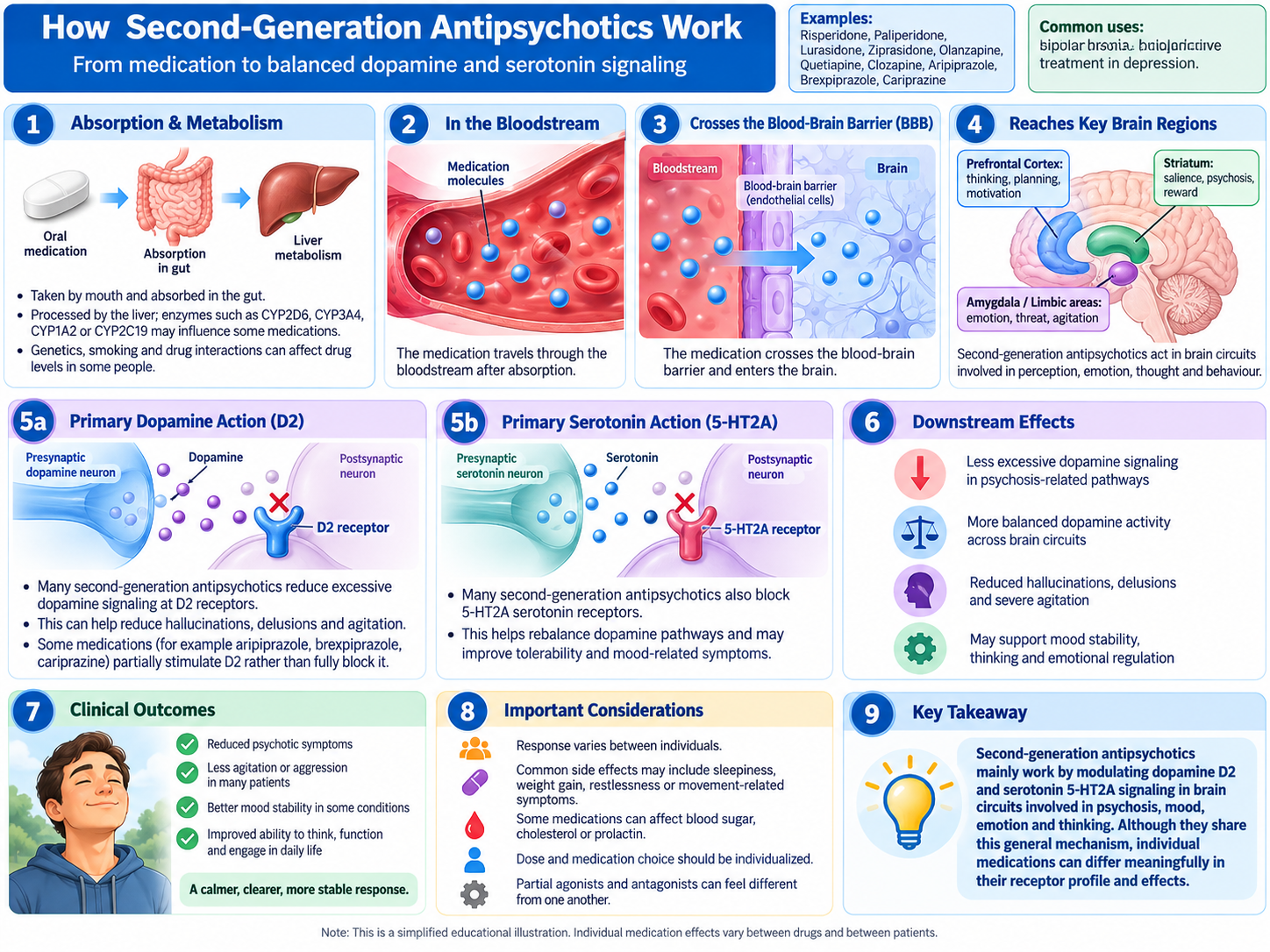
Lithium does not work primarily by blocking a single receptor or transporter.
Its exact mood-stabilizing mechanism remains incompletely understood.
Instead, lithium enters neurons and affects several intracellular signaling pathways.
Proposed important effects include changes in:
- Inositol signaling
- Glycogen synthase kinase-3 — GSK-3
- Second-messenger signaling
- Neurotransmitter regulation
- Neuronal excitability
- Neuroplasticity
- Cellular stress responses The current Canadian product monograph notes effects on sodium transport, neuronal excitability, catecholamine metabolism and intracellular cyclic AMP signaling, while emphasizing that the specific biochemical mechanism responsible for lithium’s antimanic effect remains uncertain.
A simplified model is:
- Lithium enters brain cells
- Intracellular signaling is modified
- Neurotransmitter and cellular signaling become better regulated
- Mood-related neural networks gradually stabilize
- Mania may improve and future mood episodes may become less frequent
Lithium does not simply increase or decrease one neurotransmitter.
What Is Lithium Used For?
Lithium is primarily used for:
Bipolar Disorder
particularly:
Acute Mania
Symptoms can include:
- Abnormally elevated or irritable mood
- Reduced need for sleep
- Increased energy
- Rapid speech
- Racing thoughts
- Grandiosity
- Poor judgment
- Excessive activity
- Aggressive or impulsive behaviour The Canadian Lithmax monograph notes that improvement during a manic episode may occur over approximately 1–3 weeks.
Lithium for Long-Term Bipolar Disorder Treatment
Lithium can also be continued after an acute episode to help: Prevent future mood episodes
Long-term treatment is often called: Maintenance Therapy
The goal is not simply to treat today’s symptoms, but to reduce the probability of future:
- Mania
- Hypomania
- Mood instability
- Bipolar relapse Lithium can be particularly effective in some patients who have a pattern of clearly defined episodes followed by periods of relatively good functioning.
Response varies considerably between individuals.
Is Lithium Used for Depression?
Lithium is not classified as a conventional antidepressant.
However, it may sometimes be used:
As augmentation for treatment-resistant depression
meaning lithium is added to an antidepressant when the antidepressant alone has not produced sufficient benefit.
This is a recognized psychiatric use internationally, although the approved indication depends on the product and jurisdiction.
For a Canadian patient-facing website, the main labeled use should remain:
Bipolar mania and bipolar maintenance treatment.
Is Lithium an Antipsychotic?
No.
Lithium does not primarily block dopamine D2 receptors like:
- Haloperidol
- Risperidone
- Olanzapine It may be combined with an antipsychotic during severe mania, but the two medication classes work differently.
Is Lithium an Antidepressant?
No.
Lithium is best classified as a: Mood Stabilizer, although it can have antidepressant and relapse-prevention effects in some clinical situations.
What Are the Common Side Effects of Lithium?
Common or clinically important effects can include:
- Fine hand tremor
- Increased thirst
- Increased urination
- Nausea
- Diarrhea
- Stomach discomfort
- Fatigue
- Sleepiness
- Muscle weakness
- Weight gain
- Cognitive slowing or feeling mentally “dulled”
- Acne or worsening acne
- Changes in thyroid function Some side effects are more noticeable when treatment begins and may improve after dose adjustment or continued treatment.
The Canadian monograph identifies tremor, fatigue, thirst, increased urination and gastrointestinal symptoms among common or early effects.
Why Does Lithium Cause Thirst and Frequent Urination?
Lithium is handled by the kidneys and can interfere with the kidney’s ability to concentrate urine.
The result can be: Polyuria, increased urination and: Polydipsia, increased thirst.
With longer treatment, some patients can develop:
Nephrogenic Diabetes Insipidus
This means the kidneys become less responsive to antidiuretic hormone and cannot concentrate urine normally.
The pathway is approximately:
- Lithium enters kidney tubules
- Renal water-regulation mechanisms are disrupted
- Less concentrated urine
- More urine produced
- Increased thirst
The Canadian Lithmax monograph specifically recognizes decreased renal concentrating capacity, polyuria, nocturia and occasional nephrogenic diabetes insipidus during chronic therapy.
Can Lithium Affect the Kidneys?
Yes.
Kidney function is one of the most important considerations during long-term lithium treatment.
Lithium is eliminated almost entirely through:
The Kidneys
Chronic treatment can sometimes cause:
- Reduced ability to concentrate urine
- Polyuria
- Nephrogenic diabetes insipidus
- Changes in kidney function Long-term structural renal changes, including interstitial fibrosis, have also been reported.
Because of this, kidney function should be assessed:
Before starting lithium
and:
Regularly during treatment.
Important measurements can include:
- Serum creatinine
- Estimated GFR
- Urinalysis when indicated
- Urine volume or concentration when excessive thirst/urination occurs Progressive changes in kidney function require reassessment of the benefit-risk balance and lithium dosing.
Can Lithium Affect the Thyroid?
Yes.
Lithium can interfere with thyroid-hormone production and release.
It may cause:
Hypothyroidism
or:
Goiter — thyroid enlargement
Symptoms of hypothyroidism can include:
- Fatigue
- Feeling cold
- Weight gain
- Constipation
- Dry skin
- Slowed thinking
- Low energy The Canadian monograph reports thyroid abnormalities, including hypothyroidism and goiter, during long-term treatment.
Importantly:
Developing hypothyroidism does not necessarily mean lithium must be stopped.
In some patients, thyroid-hormone replacement can be used while lithium treatment continues.
Can Lithium Affect Calcium and the Parathyroid Glands?
Yes.
Long-term lithium therapy can increase:
Blood calcium
and can contribute to:
Hyperparathyroidism
The current Canadian monograph notes that around 10% of patients on long-term lithium therapy may develop hypercalcemia with or without hyperparathyroidism, based on a systematic review and meta-analysis.
For this reason, calcium may be checked:
- Before treatment
- During long-term therapy and parathyroid hormone may be measured if calcium becomes elevated.
Can Lithium Cause Weight Gain?
Yes.
Weight gain can occur during lithium treatment.
Possible contributors include:
- Increased thirst and consumption of caloric beverages
- Changes in thyroid function
- Appetite changes
- Fluid balance
- Individual metabolic differences Weight should therefore be monitored during longer-term treatment.
Can Lithium Cause Tremor?
Yes.
A:
Fine hand tremor
is one of lithium’s characteristic side effects.
A mild, stable tremor can occur at therapeutic concentrations.
However:
A new, worsening or coarse tremor can also be an early warning sign of lithium toxicity.
The distinction should be clinically assessed rather than assumed.
Lithium Toxicity
Lithium toxicity is one of the most important safety issues with this medication.
Lithium has a narrow therapeutic range, and toxicity may occur relatively close to concentrations used for treatment.
Early symptoms can include:
-
Increasing tremor
-
Nausea
-
Vomiting
-
Diarrhea
-
Muscle weakness
-
Drowsiness
-
Dizziness
-
Poor coordination
-
Unsteady walking More serious toxicity can cause:
-
Confusion
-
Slurred speech
-
Severe ataxia
-
Muscle twitching
-
Hyperreflexia
-
Seizures
-
Abnormal heart rhythms
-
Coma The current Canadian Lithmax monograph states that mild-to-moderate toxic reactions may occur around 1.5–2 mmol/L, with more severe toxicity increasingly likely above 2 mmol/L, although susceptible patients can experience toxicity at lower concentrations.
Symptoms matter as much as the number.
A person with symptoms suggestive of lithium toxicity requires prompt medical assessment even if a recent lithium level appeared acceptable.
What Can Suddenly Increase Lithium Levels?
A patient can be stable on the same dose for months and then develop a much higher lithium concentration.
Why?
Because lithium clearance depends heavily on:
Kidney function + sodium balance + hydration
Important triggers include:
- Dehydration
- Vomiting
- Diarrhea
- Heavy sweating
- Fever
- Reduced sodium intake
- Kidney impairment
- Starting certain medications
- Major changes in fluid intake The kidneys handle lithium partly in ways similar to sodium.
When the body attempts to retain sodium:
It can also retain more lithium.
This can rapidly increase toxicity risk.
Lithium and Salt Intake
Patients taking lithium should generally avoid making large, sudden changes in:
Salt intake
A major reduction in sodium intake can cause the kidneys to retain more lithium.
Therefore:
- Sodium decreases
- Kidneys increase sodium reabsorption
- Lithium reabsorption also increases
- Blood lithium rises
The Canadian monograph emphasizes maintaining a normal diet including salt and adequate fluid intake, particularly during stabilization.
This does not mean patients should deliberately eat a high-salt diet.
The key principle is:
Consistency.
Lithium and Dehydration
Dehydration is a particularly important lithium risk.
Causes include:
- Vomiting
- Diarrhea
- Fever
- Heavy sweating
- Intense exercise
- Hot weather
- Inadequate fluid intake Dehydration reduces lithium clearance and can increase serum concentrations.
Patients taking lithium should receive clear instructions about what to do during significant illness, vomiting, diarrhea or dehydration.
Lithium Drug Interactions
Lithium has several extremely important interactions.
Unlike many psychiatric medications, most major lithium interactions do not involve CYP450 enzymes.
Instead, they affect:
Kidney handling of lithium
NSAIDs — Ibuprofen, Naproxen and Others
Nonsteroidal anti-inflammatory drugs can increase lithium concentrations.
Examples include:
- Ibuprofen
- Naproxen
- Indomethacin
- Diclofenac
- Other NSAIDs The mechanism involves changes in renal blood flow and lithium clearance.
Therefore:
- NSAID
- Renal lithium clearance decreases
- Lithium concentration rises
The Canadian monograph notes that indomethacin has increased steady-state lithium concentrations by approximately 30–59%, and other NSAIDs can produce similar effects. More frequent lithium monitoring is recommended when these combinations are used.
This is one of the most important over-the-counter interactions for patients to know.
ACE Inhibitors
Examples include:
- Ramipril
- Lisinopril
- Perindopril
- Enalapril
- Captopril ACE inhibitors can decrease renal lithium clearance.
Therefore:
- ACE inhibitor
- Lithium clearance decreases
- Lithium concentration may increase
The combination may still sometimes be used, but dose adjustment and closer lithium monitoring can be necessary.
Diuretics
Diuretics can substantially alter lithium concentrations.
Of particular concern are:
Thiazide diuretics
such as:
- Hydrochlorothiazide
- Chlorthalidone
- Indapamide Thiazides increase sodium loss.
The kidney then attempts to retain sodium—and lithium can be retained along with it.
Therefore:
- Thiazide
- Sodium loss
- Renal lithium reabsorption increases
- Lithium concentration rises
The Canadian monograph specifically warns that patients stabilized on lithium may require a lithium-dose reduction if a thiazide is introduced.
Other Blood-Pressure Medications
Other medications affecting kidney function or sodium balance may also alter lithium concentrations.
The medication list should therefore be reviewed whenever:
- Lithium is started
- Another cardiovascular medication is added
- Blood-pressure treatment is changed
SSRIs, SNRIs and Other Serotonergic Drugs
Lithium can influence serotonin signaling.
Combining lithium with serotonergic medications such as:
- Fluoxetine
- Fluvoxamine
- Sertraline
- Other SSRIs
- SNRIs
- Some other serotonergic medications can increase the risk of:
Serotonin Syndrome
Symptoms can include:
- Agitation
- Confusion
- Sweating
- Tremor
- Muscle twitching
- Overactive reflexes
- Fever
- Diarrhea The Canadian monograph specifically recommends monitoring for serotonin syndrome when lithium is combined with serotonergic medications.
Haloperidol and Other Antipsychotics
Lithium and antipsychotics are sometimes intentionally combined during severe mania.
However, rare cases of significant neurological toxicity have been reported with:
Lithium + haloperidol
Symptoms have included:
- Weakness
- Severe lethargy
- Tremor
- Confusion
- Extrapyramidal symptoms
- Fever The current Canadian monograph recommends close monitoring when lithium and haloperidol are combined.
This does not mean the combination should never be used, but neurological symptoms should not be ignored.
Caffeine
Caffeine can influence lithium clearance.
Large changes in habitual caffeine consumption can potentially change lithium concentrations.
For example, abruptly reducing a very high caffeine intake may allow lithium concentrations to rise in some patients.
The practical principle is:
Keep caffeine consumption reasonably consistent and discuss major changes with the healthcare team.
How Is Lithium Different from Most Psychiatric Medications?
Most medications are chemically transformed by liver enzymes such as:
- CYP2D6
- CYP2C19
- CYP3A4 Lithium is different.
Lithium is not metabolized by the liver.
It is an ion.
After being absorbed:
- Lithium enters the bloodstream
- Distributes throughout body water
- No CYP metabolism
- Kidneys filter lithium
- Lithium is excreted primarily unchanged in urine
The Canadian monograph reports an elimination half-life of approximately 24 hours, with renal clearance decreasing with age or lower sodium intake.
This makes:
Kidney function
far more important than CYP2D6 or CYP2C19 phenotype for lithium dosing.
Lithium Dosage
Lithium dosage is highly individualized.
It depends on:
- Acute mania versus maintenance therapy
- Serum lithium concentration
- Kidney function
- Age
- Other medications
- Sodium intake
- Hydration
- Side effects
- Previous response Milligram dose alone is not enough.
Two people taking the same lithium dose may have very different blood concentrations.
Lithmax Dosage in Canada
For the current Canadian Lithmax 300 mg sustained-release tablet, the product monograph gives an adult initial dosage for acute mania of:
600–900 mg/day in two divided doses
with subsequent adjustment according to the clinical response and measured lithium concentration.
During established acute treatment, the monograph describes doses of approximately:
1,200–1,800 mg/day
to reach its specified acute serum range.
For long-term control, it describes approximately:
600–1,200 mg/day
with dosing individualized to maintain an appropriate serum concentration.
These are product-label ranges rather than a universal dosing schedule. Lithium dosing should always be guided by serum concentration and clinical assessment.
What Is the Therapeutic Lithium Level?
The desired blood concentration depends on:
- Treatment phase
- Patient age
- Response
- Tolerability
- Clinical guideline
- Formulation For Canadian Lithmax maintenance therapy, the monograph specifies:
0.6–1.2 mmol/L
and uses higher concentrations during acute mania.
However, the appropriate target should be individualized, and many patients—particularly older adults or those prone to adverse effects—may require lower concentrations.
The central rule is:
Use the lowest lithium concentration that provides effective mood stabilization without unacceptable toxicity.
When Should a Lithium Blood Level Be Taken?
Timing matters.
Lithium concentrations are generally standardized as a:
12-Hour Level
The Canadian Lithmax monograph recommends measuring concentrations when levels are relatively stable, approximately:
10–14 hours after the previous dose and generally before the next dose.
A lithium result taken at the wrong time can be misleading.
Therefore, the laboratory and prescriber should know:
When the last lithium dose was taken.
Why Are Blood Tests Necessary with Lithium?
Lithium requires more monitoring than many psychiatric medications because:
The therapeutic range is narrow
and:
The kidneys and thyroid can be affected over time.
Before treatment, evaluation commonly includes:
- Kidney function
- Electrolytes
- Thyroid function
- Weight
- Medication review
- Pregnancy considerations when relevant
- Cardiovascular assessment when indicated During treatment, monitoring can include:
Serum lithium
Creatinine / kidney function
TSH and thyroid hormones
Calcium Electrolytes Weight
and sometimes:
ECG
The current Canadian Lithmax monograph explicitly recommends ongoing monitoring of lithium concentration, renal and thyroid function, and consideration of calcium monitoring during long-term therapy.
How Often Should Lithium Levels Be Checked?
Monitoring is usually more frequent:
- When starting lithium
- After a dose change
- After starting or stopping an interacting medication
- During illness or dehydration
- If kidney function changes
- When toxicity is suspected Once treatment and serum levels are stable, monitoring can be less frequent.
The current Lithmax product monograph states that uncomplicated maintenance patients should have serum lithium monitored at least every two months, although actual clinical schedules may differ according to current practice, patient risk and formulation.
Lithium and Pregnancy
Lithium requires careful consideration during pregnancy.
First-trimester exposure has historically been associated with an increased risk of congenital cardiac abnormalities, including:
Ebstein anomaly
although modern evidence indicates that the absolute risk is smaller than early reports suggested.
Canadian product information nevertheless recommends careful benefit-risk assessment and generally avoiding lithium during pregnancy unless the expected benefit justifies the potential risk.
Pregnancy can also change:
Kidney filtration
and therefore:
Lithium concentration
so lithium management during pregnancy requires specialist monitoring.
Lithium should never be abruptly discontinued solely because pregnancy is discovered without discussing the situation with the treating clinician, since relapse of bipolar disorder can also carry substantial risk.
Lithium and Breastfeeding
Lithium can enter breast milk.
Because newborn kidneys have limited capacity to eliminate lithium, breastfeeding while taking lithium requires specialist assessment and, when undertaken, careful monitoring of the infant.
The decision should be individualized with psychiatric, obstetric and pediatric input.
Can Lithium Be Stopped Suddenly?
Lithium does not usually cause a classic withdrawal syndrome comparable with benzodiazepines.
However:
Abrupt discontinuation can substantially increase the risk of bipolar relapse.
When clinically appropriate, long-term lithium is therefore generally reduced gradually rather than suddenly stopped.
The pace depends on:
- Current dose
- Bipolar history
- Previous relapses
- Reason for stopping
- Other mood-stabilizing treatment An urgent medical problem such as significant lithium toxicity is different and may require immediate discontinuation under medical supervision.
What Should Someone Do if They Miss a Lithium Dose?
A missed dose should not usually be compensated for by doubling the next dose.
Instructions can vary depending on:
- Formulation
- Once- versus twice-daily dosing
- Time since the missed dose The safest approach is to follow the instructions provided with the specific lithium product or contact the pharmacist if uncertain.
Frequently Asked Questions
What Is Lithium Used For?
Lithium is primarily used to treat:
Bipolar disorder
particularly:
- Acute mania
- Long-term relapse prevention
Is Lithium a Mood Stabilizer?
Yes.
Lithium is one of the classic and most established:
Mood stabilizers
used in bipolar disorder.
Is Lithium an Antidepressant?
Not in the conventional sense.
Lithium may sometimes be used to augment antidepressant treatment, but its principal role is mood stabilization.
Is Lithium an Antipsychotic?
No.
Lithium does not primarily block dopamine D2 receptors.
Antipsychotics and lithium may sometimes be used together during acute mania.
Does Lithium Work Immediately?
No.
For acute mania, improvement can begin over days, but meaningful normalization may take approximately:
1–3 weeks
according to Canadian product information.
An antipsychotic may therefore sometimes be used concurrently when rapid control of severe mania is needed.
Does Lithium Require Blood Tests?
Yes.
Regular blood tests are essential because lithium has a narrow therapeutic range.
Monitoring commonly includes:
- Lithium level
- Kidney function
- Thyroid function
- Calcium
- Electrolytes
Why Does Lithium Need a 12-Hour Blood Test?
Lithium concentrations change after each dose.
Using a standardized time—usually approximately:
12 hours after the previous dose
allows results to be compared more meaningfully over time.
What Are Signs of Too Much Lithium?
Potential warning signs include:
- Worsening tremor
- Vomiting
- Diarrhea
- Muscle weakness
- Severe drowsiness
- Poor coordination
- Slurred speech
- Confusion These should be taken seriously because lithium toxicity can progress.
Can Ibuprofen Increase Lithium Levels?
Yes.
Ibuprofen and other NSAIDs can reduce lithium clearance and increase blood concentrations.
Regular NSAID use should therefore be discussed with the prescriber or pharmacist.
Can Naproxen Increase Lithium Levels?
Yes.
Naproxen belongs to the same NSAID class and can also increase lithium exposure.
Can Blood-Pressure Medication Affect Lithium?
Yes.
Particularly important examples include:
- ACE inhibitors
- Some diuretics These may significantly increase lithium concentrations.
Can Dehydration Cause Lithium Toxicity?
Yes.
Dehydration can reduce lithium clearance and raise blood concentrations.
Significant:
- Vomiting
- Diarrhea
- Fever
- Heavy sweating should be taken seriously in someone taking lithium.
Can Low Salt Intake Raise Lithium Levels?
Yes.
Suddenly reducing sodium intake can cause the kidneys to retain more lithium.
Patients should generally maintain reasonably consistent sodium and fluid intake unless their healthcare professional advises otherwise.
Can Lithium Damage the Kidneys?
Long-term lithium can affect kidney function in some patients.
This is why renal monitoring is an essential component of lithium treatment.
Can Lithium Cause Hypothyroidism?
Yes.
Lithium can cause hypothyroidism or goiter.
Thyroid function should therefore be monitored during long-term treatment.
Does Hypothyroidism Mean Lithium Must Be Stopped?
Not necessarily.
If lithium is otherwise highly effective, hypothyroidism may sometimes be treated with thyroid-hormone replacement while lithium continues.
Can Lithium Raise Calcium?
Yes.
Lithium can cause hypercalcemia and hyperparathyroidism in some patients, particularly during long-term treatment.
Does Lithium Cause Weight Gain?
It can.
Weight gain varies considerably between individuals and can be influenced by thyroid function, appetite, fluid intake and other medications.
Does Lithium Cause Tremor?
Yes.
A fine tremor is relatively common.
A new or dramatically worsening tremor, particularly with gastrointestinal or neurological symptoms, can suggest toxicity and should be assessed.
Can Lithium Be Taken With an SSRI?
Yes, in selected patients, and lithium is sometimes deliberately added to an antidepressant.
However, combined serotonergic effects can increase the risk of serotonin syndrome, so the combination should be clinically supervised.
Can Lithium Be Taken with Haloperidol?
The medications may sometimes be used together, particularly in severe mania.
However, rare neurological toxicity has been reported with the combination, and patients should be monitored closely.
Which CYP Enzyme Metabolizes Lithium?
None.
Lithium is:
Not metabolized by CYP2D6
Not metabolized by CYP2C19
Not metabolized by CYP3A4
It is excreted primarily by the kidneys.
Can Pharmacogenomic Testing Determine the Lithium Dose?
Lithium dosing is based primarily on:
- Serum lithium concentration
- Kidney function
- Age
- Hydration
- Sodium balance
- Interacting medications
- Clinical response There is currently no validated genotype-based lithium dosing algorithm.
Can Genetics Predict Whether Lithium Will Work?
Not reliably enough for routine clinical use.
Lithium response appears highly polygenic.
Research has examined genes including:
- GSK3B
- INPP1
- IMPA2
- BDNF
- SLC6A4 as well as genome-wide polygenic patterns, but no candidate gene has become a validated clinical predictor of lithium response.
References
This article is educational. It does not diagnose, and it does not replace advice from your prescriber or pharmacist. Never start, stop or change a medication based on a web page.