
Medication profile
Fluvoxamine
Fluvoxamine works mainly by increasing the availability of Serotonin. Its principal brain target is the Serotonin Transporter — SERT
 Written by Sanjida Ahmed, PhD, Cellular and Molecular BiologyChief Operating Officer and Lead Scientist, Personalized Prescribing. Last reviewed October 2, 2026.
- Best-known brand name
- Luvox
- Class
- SSRI (selective serotonin reuptake inhibitor)
On this page
- What You Need to Know
- What Is Fluvoxamine Used For?
- Obsessive-Compulsive Disorder
- What Are the Common Side Effects of Fluvoxamine?
- Does Fluvoxamine Make You Sleepy?
- Fluvoxamine and Sexual Side Effects
- Drug Interactions
- QT prolongation
- Fluvoxamine Dosage
- Should Fluvoxamine Be Taken in the Morning or at Night?
- At bedtime
- Should Fluvoxamine Be Taken with Food?
- Fluvoxamine and Liver or Kidney Function
- Tapering and Stopping Fluvoxamine
- Why Can Fluvoxamine Withdrawal Occur?
- Frequently Asked Questions
- Selective Serotonin Reuptake Inhibitor
- Depression + OCD
Fluvoxamine is a selective serotonin reuptake inhibitor (SSRI) used particularly for obsessive-compulsive disorder (OCD) and depression.
In Canada, Luvox 50 mg and 100 mg tablets remain marketed, along with generic products such as APO-Fluvoxamine and TEVA-Fluvoxamine.
What You Need to Know
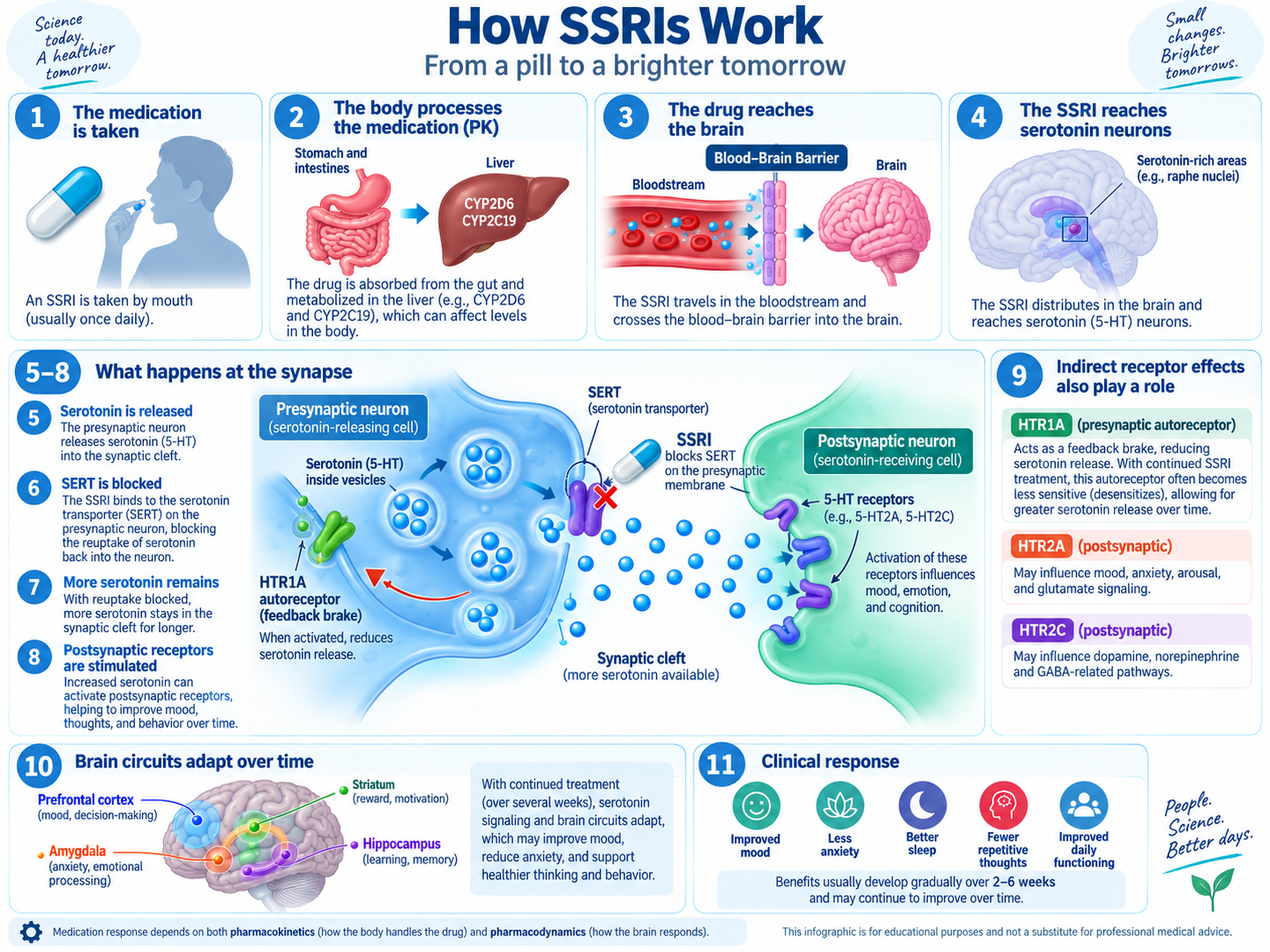
Fluvoxamine works mainly by increasing the availability of Serotonin. Its principal brain target is the Serotonin Transporter — SERT
Normally, SERT transports serotonin back into the nerve cell after serotonin has been released.
Fluvoxamine blocks this transporter.
Therefore:
- Fluvoxamine
- Blocks SERT
- Serotonin reuptake decreases
- More serotonin remains available between nerve cells
- Serotonin receptor signaling changes
- Brain circuits gradually adapt
- Depression or OCD symptoms may improve
Fluvoxamine is particularly notable for two additional characteristics:
-
It is strongly associated with OCD treatment
-
It is a powerful inhibitor of several liver enzymes, particularly CYP1A2
This gives fluvoxamine more clinically important drug interactions than many other SSRIs.
What Is Fluvoxamine Used For?
In Canada, Luvox is indicated in adults for:
- Depression
- Obsessive-compulsive disorder — OCD The Canadian product monograph describes fluvoxamine as both an antidepressant and antiobsessional agent.
Current Canadian labeling does not indicate Luvox for patients under 18 years of age.
This differs from the United States, where immediate-release fluvoxamine is approved specifically for OCD, including pediatric OCD in patients aged 8–17 years.
Fluvoxamine for OCD
Fluvoxamine is particularly well known for its use in:
Obsessive-Compulsive Disorder
OCD can involve:
-
Obsessions- recurrent, unwanted thoughts, images or urges
-
Compulsions- repetitive behaviours or mental acts that a person feels driven to perform. Fluvoxamine changes serotonin signaling within brain networks involved in:
-
Repetitive thinking
-
Behavioural inhibition
-
Cognitive flexibility
-
Threat processing
-
Habit formation These include circuits connecting the:
-
Prefrontal cortex
-
Striatum
-
Thalamus
-
Other cortical regions The simplified pathway is:
- Fluvoxamine
- SERT inhibition
- Serotonin signaling changes
- Cortical-striatal circuits gradually adapt
- Obsessions and compulsions may decrease
OCD often requires a longer treatment period and sometimes a higher SSRI dose than uncomplicated depression.
Fluvoxamine for Depression
Fluvoxamine is also approved in Canada for depression.
Depression can involve dysregulation of several brain systems controlling:
- Mood
- Anxiety
- Stress
- Sleep
- Motivation
- Emotional regulation
- Concentration
- Repetitive negative thinking Fluvoxamine does not simply correct a supposed “serotonin deficiency.”
A more accurate model is:
- Fluvoxamine inhibits SERT
- Serotonin availability changes
- Serotonin receptors and feedback systems respond
- Emotional and cognitive networks gradually adapt
- Depressive symptoms may improve
The therapeutic response usually takes several weeks, even though SERT inhibition begins much sooner.
What Are the Common Side Effects of Fluvoxamine?
Common side effects can include:
- Nausea
- Sleepiness
- Insomnia
- Fatigue or weakness
- Nervousness
- Headache
- Dizziness
- Tremor
- Increased sweating
- Reduced appetite
- Vomiting
- Indigestion
- Dry mouth
- Sexual side effects Clinical-trial data identify nausea, somnolence, insomnia, asthenia, nervousness, dyspepsia, abnormal ejaculation, sweating, reduced appetite, tremor and vomiting among the more characteristic adverse effects.
Does Fluvoxamine Make You Sleepy?
It can.
Fluvoxamine commonly causes:
- Sleepiness
- Fatigue which is one reason the Canadian starting dose is usually given at bedtime.
However, some people experience the opposite effect:
- Insomnia
- Restlessness
- Nervousness Individual response varies.
Fluvoxamine and Sexual Side Effects
Like other SSRIs, fluvoxamine can affect sexual function.
Possible effects include:
- Reduced libido
- Delayed ejaculation
- Difficulty reaching orgasm
- Anorgasmia
- Erectile difficulties Current Canadian labeling also notes reports of persistent sexual dysfunction after discontinuation of SSRIs in some patients.
Fluvoxamine increases serotonin signaling.
Using it with other serotonergic medications can rarely cause: Serotonin syndrome
Symptoms can include:
- Agitation
- Confusion
- Fever
- Heavy sweating
- Tremor
- Muscle twitching
- Overactive reflexes
- Muscle rigidity
- Rapid heart rate
- Diarrhea
- Nausea Severe serotonin syndrome requires urgent medical treatment.
Risk is especially important with:
- MAO inhibitors
- Other SSRIs or SNRIs
- Tramadol
- Certain opioids
- Buspirone
- Lithium
- Triptans
- St. John’s Wort
Suicidal Thoughts and Behaviour
As with other antidepressants, patients should be monitored for:
-
Worsening depression
-
Suicidal thoughts
-
Self-harm
-
Severe agitation
-
Unusual behavioural changes Monitoring is particularly important:
-
When treatment begins
-
After dose changes
-
In younger patients Canadian labeling recommends close monitoring for emerging suicidality and significant behavioural changes.
Mania or Hypomania
Fluvoxamine and other antidepressants can occasionally trigger: Mania or hypomania
particularly in people with bipolar disorder.
Symptoms can include:
- Unusually elevated or irritable mood
- Very high energy
- Reduced need for sleep
- Racing thoughts
- Excessive activity
- Impulsive behaviour A history of bipolar disorder should therefore be considered before antidepressant treatment.
Low Sodium — Hyponatremia
Fluvoxamine can rarely cause: Hyponatremia or low blood sodium. This can occur through SIADH.
The risk may be greater in:
-
Older adults
-
People taking diuretics
-
People who are dehydrated or volume depleted Symptoms can include:
-
Headache
-
Confusion
-
Weakness
-
Difficulty concentrating
-
Memory problems
-
Unsteadiness Canadian labeling specifically recognizes this risk.
-
Bleeding Risk SSRIs can interfere with platelet function.
Fluvoxamine can therefore increase bleeding risk, particularly when combined with:
-
Aspirin
-
Ibuprofen
-
Naproxen
-
Other NSAIDs
-
Warfarin
-
Apixaban
-
Rivaroxaban
-
Other anticoagulants
-
Antiplatelet medications Patients should report unusual bruising or bleeding.
-
Seizures Seizures are uncommon but can occur.
Fluvoxamine should be used cautiously in people with seizure disorders and is generally avoided in unstable epilepsy. Canadian labeling recommends discontinuation if seizures develop or become more frequent.
Drug Interactions
This is one of the most important features of fluvoxamine.
Fluvoxamine inhibits several cytochrome P450 enzymes.
The most important is: CYP1A2
It also inhibits:CYP2C19 and to varying degrees:
- CYP2C9
- CYP3A4 Current prescribing information describes fluvoxamine as a potent CYP1A2 inhibitor with clinically significant inhibition of several other CYP pathways.
This means fluvoxamine can cause concentrations of other medications to increase substantially.
Tizanidine — Contraindicated
Tizanidine is a muscle relaxant metabolized primarily by:
CYP1A2
Fluvoxamine strongly inhibits CYP1A2.
Therefore:
- Fluvoxamine
- CYP1A2 inhibition
- Tizanidine metabolism decreases dramatically
- Tizanidine concentration rises
- Possible:
- Severe low blood pressure
- Slow heart rate
- Excessive sedation
- Fainting The interaction is sufficiently large that the combination is contraindicated. Tizanidine exposure has been reported to increase roughly 33-fold by AUC with fluvoxamine.
Ramelteon — Contraindicated
Ramelteon is a sleep medication metabolized heavily through CYP1A2.
Fluvoxamine can cause an extraordinary increase in ramelteon exposure.
In an interaction study:
- Ramelteon AUC increased approximately 190-fold
- Peak concentration increased approximately 70-fold when given with fluvoxamine.
The combination is contraindicated in Canadian labeling.
Clozapine
This interaction is especially important in psychiatry.
Clozapine is metabolized substantially through:
CYP1A2
Fluvoxamine inhibits CYP1A2.
Therefore:
- Fluvoxamine
- CYP1A2 inhibition
- Clozapine metabolism decreases
- Clozapine concentration can rise substantially
This can increase risks such as:
- Sedation
- Seizures
- Tachycardia
- Hypotension
- Other concentration-related clozapine toxicity Canadian labeling specifically notes elevated clozapine concentrations when fluvoxamine is added.
Although specialists sometimes intentionally use fluvoxamine to alter clozapine metabolism, this requires careful dose adjustment and therapeutic drug monitoring and should not be regarded as an ordinary combination.
Olanzapine
Olanzapine is also metabolized significantly by CYP1A2.
Fluvoxamine can therefore:
- Decrease olanzapine metabolism
- Increase olanzapine concentrations
Canadian labeling specifically identifies increased concentrations of CYP1A2-dependent antipsychotics including clozapine and olanzapine.
Theophylline
Theophylline has a narrow therapeutic range and depends strongly on CYP1A2.
Fluvoxamine can increase theophylline exposure and potentially cause toxicity.
Symptoms may include:
- Nausea
- Tremor
- Rapid heart rate
- Restlessness
- Seizures in severe cases Theophylline concentrations may therefore require close monitoring when fluvoxamine is introduced or discontinued.
Caffeine and Coffee
This is a particularly useful interaction for patients to know.
Caffeine is metabolized mainly by:
CYP1A2
Fluvoxamine inhibits CYP1A2.
Therefore:
- Coffee / caffeine
- Fluvoxamine
- Caffeine metabolism slows
- Caffeine levels can rise
Possible symptoms include:
- Tremor
- Palpitations
- Restlessness
- Nausea
- Anxiety
- Insomnia Canadian labeling specifically advises patients consuming large quantities of caffeinated beverages to reduce intake if caffeine-related adverse effects develop.
Warfarin
Fluvoxamine can increase warfarin concentrations and also increase bleeding risk through its serotonergic effect on platelets.
Canadian interaction studies reported approximately a: 65% increase in warfarin plasma concentrations
along with prolonged prothrombin time.
Patients using warfarin generally require closer anticoagulation monitoring when fluvoxamine is started, changed or stopped.
Propranolol
Fluvoxamine can substantially increase propranolol concentrations.
Canadian interaction data reported approximately a: Five-fold increase in propranolol levels.
This could increase:
- Slow heart rate
- Low blood pressure
- Dizziness
- Fatigue Dose adjustment may therefore be needed.
Diazepam and Alprazolam
Fluvoxamine can slow the metabolism of several benzodiazepines.
Diazepam
is affected partly through CYP2C19 inhibition.
Alprazolam
is affected through oxidative metabolism involving CYP3A pathways.
Fluvoxamine can therefore increase:
- Sedation
- Dizziness
- Cognitive impairment
- Psychomotor impairment In a clinical study, fluvoxamine approximately doubled alprazolam exposure.
Benzodiazepines mainly cleared by glucuronidation, such as lorazepam, oxazepam and temazepam, are less affected by this mechanism.
Methadone
Methadone is metabolized through several CYP pathways that can be inhibited by fluvoxamine.
Fluvoxamine can therefore raise methadone exposure in some patients.
Because methadone has important risks involving:
- Sedation
- Respiratory depression
- QT prolongation the combination deserves additional monitoring. Canadian labeling identifies methadone among narrow-therapeutic-index drugs requiring caution.
Pimozide, Thioridazine and Mesoridazine
These combinations are contraindicated because fluvoxamine can raise antipsychotic concentrations and increase the risk of:
QT prolongation
and serious ventricular arrhythmias.
Canadian Luvox labeling specifically contraindicates these combinations.
MAO Inhibitors
Fluvoxamine should not be combined with MAO inhibitors because of the risk of severe serotonin syndrome.
Examples include:
- Phenelzine
- Tranylcypromine
- Moclobemide in relevant circumstances
- Linezolid
- Intravenous methylene blue A suitable washout period is required when switching between these medications and fluvoxamine.
Fluvoxamine Dosage
Canadian Luvox tablets are marketed in the strength of:
-
50 mg
-
100 mg Dosage should be individualized according to:
-
Diagnosis
-
Response
-
Side effects
-
Age
-
Liver or kidney function
-
Drug interactions
-
Pharmacogenomic findings where applicable
Fluvoxamine Dosage for Depression
Canadian guidance recommends:
Starting dose: 50 mg once daily at bedtime
After several days, if tolerated:
100 mg once daily at bedtime
may be used.
The usual effective range is:
100–200 mg/day
with a maximum of:
300 mg/day
Dose increases are generally made in:
50 mg increments
Doses above 150 mg/day should generally be divided, with no more than 150 mg given as the bedtime portion.
Fluvoxamine Dosage for OCD
For adults with OCD:
Starting dose: 50 mg at bedtime
The usual effective range is:
100–300 mg/day
with a:
Maximum of 300 mg/day
Dose increases are generally made in 50 mg increments according to tolerability and response. Doses over 150 mg/day are divided.
Should Fluvoxamine Be Taken in the Morning or at Night?
Canadian treatment generally begins with fluvoxamine:
At bedtime
because sleepiness can occur.
If the total dose becomes high enough to require divided dosing, part of the dose may be given earlier in the day.
The best schedule depends on:
- Dose
- Sleepiness
- Insomnia
- Individual response
Should Fluvoxamine Be Taken with Food?
Fluvoxamine tablets can generally be taken with or without food.
The Canadian monograph advises swallowing the tablet with water without chewing.
Taking it consistently in the same way can help minimize day-to-day variation.
Fluvoxamine and Liver or Kidney Function
Patients with:
- Hepatic impairment
- Renal impairment should generally begin at a lower dose and be carefully monitored, according to Canadian labeling.
Liver impairment is particularly relevant because fluvoxamine is extensively metabolized.
Tapering and Stopping Fluvoxamine
Fluvoxamine should generally not be stopped abruptly after regular treatment.
Abrupt discontinuation can cause symptoms such as:
- Dizziness
- Anxiety
- Agitation
- Abnormal or vivid dreams
- Headache
- Fatigue
- Nausea
- Vomiting
- Tremor
- Sweating
- Tingling sensations
- “Electric shock” sensations Canadian prescribing information recommends reducing fluvoxamine gradually over several weeks whenever possible.
There is no single taper appropriate for everyone.
The pace should depend on:
- Dose
- Length of treatment
- Previous withdrawal symptoms
- Underlying psychiatric condition
- Other medications
- Individual sensitivity
Why Can Fluvoxamine Withdrawal Occur?
During treatment:
- SERT is continuously inhibited
- Serotonin signaling adapts
If fluvoxamine is removed suddenly:
- SERT inhibition drops quickly
- Serotonin signaling changes rapidly
- The brain has insufficient time to readjust
- Discontinuation symptoms may occur
This is physiological adaptation and should not be confused with addiction.
Frequently Asked Questions
Is Fluvoxamine the Same as Luvox?
Yes.
Luvox is the best-known brand name for fluvoxamine.
Luvox 50 mg and 100 mg tablets remain marketed in Canada.
Is Fluvoxamine an SSRI?
Yes.
Fluvoxamine is a:
Selective Serotonin Reuptake Inhibitor
Its primary action is inhibition of the serotonin transporter.
Is Fluvoxamine Mainly Used for OCD?
Fluvoxamine is particularly well known for OCD.
In Canada, however, it is approved for both:
Depression + OCD
in adults.
Does Fluvoxamine Increase Serotonin?
Indirectly, yes.
Fluvoxamine inhibits SERT, reducing serotonin reuptake and allowing serotonin to remain available between nerve cells for longer.
How Long Does Fluvoxamine Take to Work?
Some changes may begin within the first few weeks, but a fuller antidepressant or anti-OCD response can take several weeks.
OCD may require a longer treatment period before the full effect becomes apparent.
Does Fluvoxamine Make You Sleepy?
It can.
Somnolence is a common side effect, which is why treatment is often initiated at bedtime.
However, insomnia can also occur.
Can Fluvoxamine Cause Weight Gain?
Weight changes vary.
Reduced appetite may occur early in treatment, while longer-term weight gain can occur in some patients.
Fluvoxamine is not generally considered among the SSRIs most strongly associated with weight gain, but individual responses differ.
Does Fluvoxamine Cause Sexual Side Effects?
Yes.
It can cause:
- Reduced libido
- Delayed ejaculation
- Delayed orgasm
- Difficulty reaching orgasm as can other SSRIs.
Can Fluvoxamine Be Taken with Coffee?
Yes, in many cases, but fluvoxamine can greatly slow caffeine metabolism through CYP1A2 inhibition.
Some patients find that their usual coffee intake suddenly causes:
- Tremor
- Palpitations
- Anxiety
- Restlessness
- Insomnia after starting fluvoxamine.
Large caffeine intake may therefore need to be reduced.
Can Fluvoxamine Be Taken with Clozapine?
The combination can greatly increase clozapine exposure because fluvoxamine inhibits CYP1A2.
It may occasionally be used deliberately under specialist management, but it requires:
- Major clinical caution
- Clozapine dose consideration
- Therapeutic drug monitoring It is not an ordinary combination to initiate without specialist supervision.
Can Fluvoxamine Be Taken with Tizanidine?
No.
The combination is contraindicated because fluvoxamine can cause an enormous increase in tizanidine exposure, leading to severe hypotension, sedation and bradycardia.
Can Fluvoxamine Be Taken with Ramelteon?
No.
Canadian labeling contraindicates the combination.
Fluvoxamine increased ramelteon AUC approximately 190-fold in an interaction study.
Can Fluvoxamine Affect Warfarin?
Yes.
Fluvoxamine can increase warfarin exposure and may increase bleeding risk.
Additional anticoagulation monitoring may therefore be necessary when fluvoxamine is started or stopped.
Can Fluvoxamine Affect Propranolol?
Yes.
Fluvoxamine can substantially increase propranolol concentrations because of enzyme inhibition.
Canadian interaction data reported an approximately five-fold increase in propranolol concentrations.
Which Gene Is Most Important for Fluvoxamine Pharmacogenomics?
The principal established pharmacogenomic gene is:
CYP2D6
CPIC provides a specific recommendation for CYP2D6 Poor Metabolizers.
Should a CYP2D6 Poor Metabolizer Receive Less Fluvoxamine?
CPIC recommends considering a:
25–50% lower starting dose and slower titration, or considering an alternative medication not predominantly metabolized by CYP2D6.
Patients should never change their dose based on a genetic report without clinical interpretation.
Does CYP2D6 Ultrarapid Metabolizer Status Mean the Dose Should Be Increased?
No.
There is currently insufficient evidence to recommend increasing fluvoxamine solely because someone is a CYP2D6 Ultrarapid Metabolizer.
Can Fluvoxamine Fail Even with Normal CYP2D6 Metabolism?
Yes.
CYP2D6 primarily influences:
Pharmacokinetics — PK or how the body handles fluvoxamine
But treatment also requires an appropriate:
Pharmacodynamic — PD response
Once fluvoxamine reaches the brain:
- SERT must be inhibited
- Serotonin signaling changes
- Serotonin receptors respond
- Relevant brain circuits adapt
- Symptoms may or may not improve
Therefore:
Normal drug metabolism does not guarantee an optimal brain response.
Does Fluvoxamine Need to Be Tapered?
Usually yes.
Canadian labeling recommends gradual reduction over several weeks whenever possible, rather than abrupt discontinuation.
Is Fluvoxamine Addictive?
No.
Fluvoxamine is not considered addictive.
However, the nervous system adapts to regular SSRI treatment, and abrupt discontinuation can cause withdrawal or discontinuation symptoms.
Physical adaptation is different from addiction.
Can Pharmacogenomic Testing Tell Whether Fluvoxamine Will Work?
Not with certainty.
PGx testing can provide clinically useful information about CYP2D6 metabolism, particularly for Poor Metabolizers.
But treatment response also depends on:
- SERT biology
- Serotonin receptors
- Symptoms
- Diagnosis
- Dose
- Other medications
- Drug interactions
- Treatment duration
- Individual brain biology Genetic information therefore contributes to personalized prescribing but does not provide a simple yes-or-no prediction of treatment success.
References
- [https://health-products.canada.ca/dpd-bdpp/info?code=11751&lang=eng&lang=eng)
- [https://health-products.canada.ca/dpd-bdpp/search-fast-recherche-rapide?lang=eng&no=0122450002&no=0122450002)
- https://pdf.hres.ca/dpd_pm/00000851.PDF
- [https://www.viatris.ca/-/media/project/common/viatrisca/pdf/brand-and-speciality/luvox-pi-2017-06-15.pdf)
- [https://www.dailymed.nlm.nih.gov/dailymed/drugInfo.cfm?setid=7ecd83ec-88f5-4f85-9cc2-9068375d8820)
- [https://dailymed.nlm.nih.gov/dailymed/fda/fdaDrugXsl.cfm?setid=ee2aa73e-7b14-4d64-94a7-d843e08d5d77&type=display&type=display)
This article is educational. It does not diagnose, and it does not replace advice from your prescriber or pharmacist. Never start, stop or change a medication based on a web page.