
Medication profile
Amphetamine
Amphetamine is a central nervous system stimulant used primarily to treat attention-deficit/hyperactivity disorder (ADHD).
 Written by Sanjida Ahmed, PhD, Cellular and Molecular BiologyChief Operating Officer and Lead Scientist, Personalized Prescribing. Last reviewed October 2, 2026.
- Class
- Stimulant
On this page
- What You Need to Know
- What Is Amphetamine Used For?
- How Does Amphetamine Work?
- What Are the Common Side Effects of Amphetamine?
- Drug Interactions
- Adderall XR — Mixed Amphetamine Salts Extended Release
- Why Is Amphetamine Usually Taken in the Morning?
- Tapering and Stopping Amphetamine
- Does Amphetamine Need to Be Tapered?
- Frequently Asked Questions
Common Brand Names: Adderall, Adderall XR, Evekeo, Evekeo ODT, Dyanavel XR and Adzenys XR-ODT. Brand names and available formulations vary by country.
In Canada, Adderall XR is a marketed extended-release mixed amphetamine salts product, with generic versions such as APO-Amphetamine XR and Teva-Amphetamine XR also available.
What You Need to Know
Amphetamine is a central nervous system stimulant used primarily to treat attention-deficit/hyperactivity disorder (ADHD).
Amphetamine increases the activity of two important neurotransmitters in the brain:
-
Norepinephrine These chemical messengers are involved in:
-
Attention
-
Concentration
-
Motivation
-
Alertness
-
Impulse control
-
Goal-directed behaviour For people with ADHD, appropriately prescribed amphetamine can improve the brain’s ability to focus attention, control impulses and organize behaviour.
Amphetamine is a controlled medication because it can produce misuse, physical dependence and addiction when used improperly. Prescription stimulant labels carry prominent warnings about abuse, misuse and addiction.
What Is Amphetamine Used For?
Prescription amphetamine medications are primarily used for:
- Attention-deficit/hyperactivity disorder (ADHD)
- Narcolepsy with certain amphetamine formulations Mixed amphetamine salts extended release, such as Adderall XR, are specifically approved in Canada for ADHD in children aged 6 years and older, adolescents and adults.
Amphetamine may help reduce ADHD symptoms such as:
- Difficulty maintaining attention
- Easily becoming distracted
- Difficulty completing tasks
- Poor organization
- Impulsivity
- Excessive activity or restlessness
- Difficulty regulating behaviour Medication is usually one part of a broader ADHD treatment plan that can also include behavioural, psychological, educational and workplace strategies.
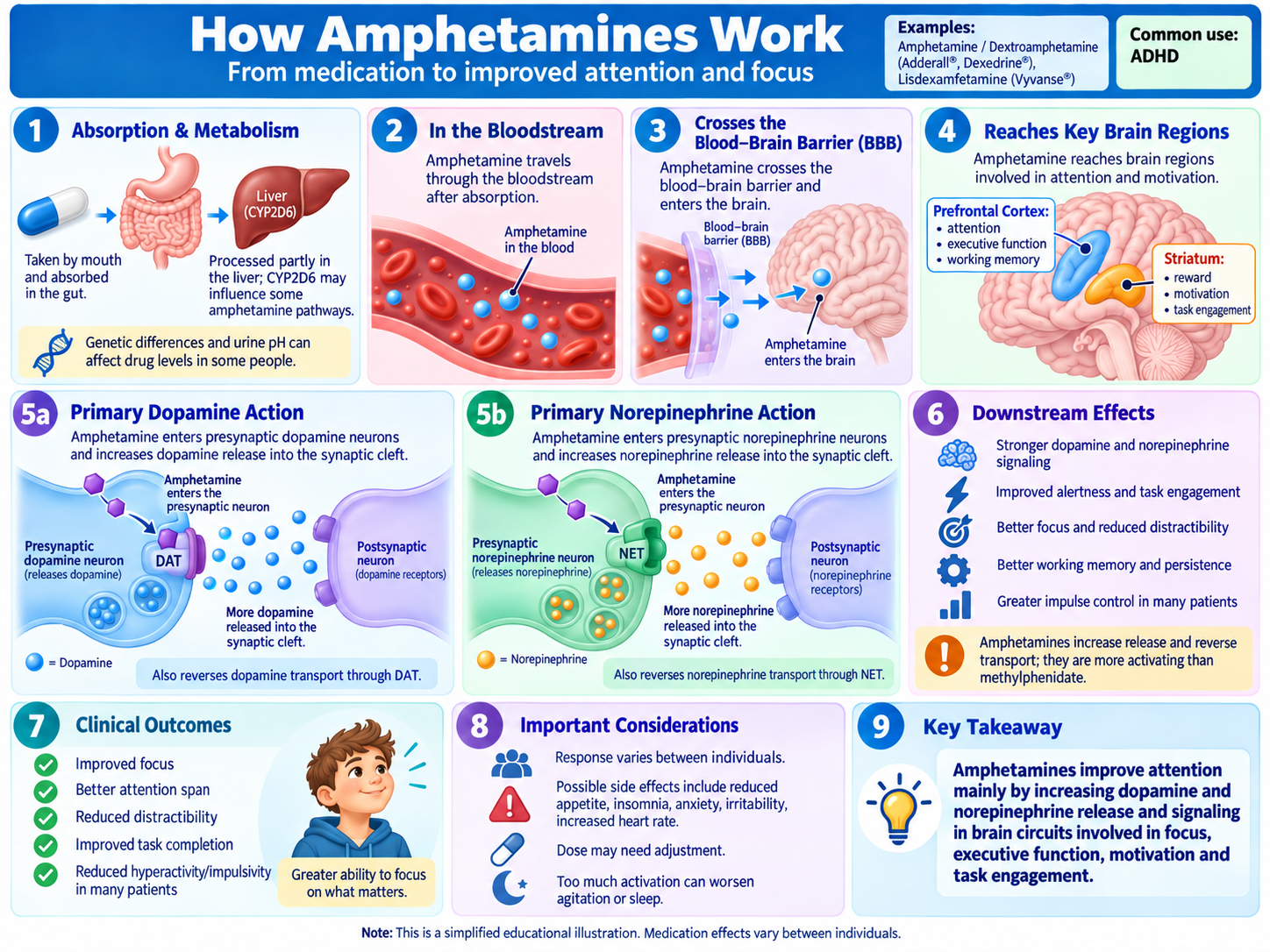
How Does Amphetamine Work?
Amphetamine primarily increases dopamine and norepinephrine signaling in the brain.
It does this differently from medications that simply block neurotransmitter reuptake.
Amphetamine enters nerve cells and increases the availability and release of dopamine and norepinephrine while also affecting their transport back into neurons.
A simplified pathway is:
- Amphetamine enters the brain
- Dopamine and norepinephrine activity increases
- Greater signaling in attention and executive-function pathways
- Improved attention, alertness and impulse control
- ADHD symptoms may improve
Brain regions involved include the prefrontal cortex, which is particularly important for:
- Attention
- Working memory
- Planning
- Decision-making
- Behavioural control Importantly, more dopamine or norepinephrine is not always better. Effective stimulant treatment depends on achieving an appropriate level of signaling without excessive stimulation.
What Are the Common Side Effects of Amphetamine?
Common side effects can include:
- Reduced appetite
- Weight loss
- Difficulty sleeping or insomnia
- Dry mouth
- Headache
- Nervousness
- Anxiety
- Agitation
- Dizziness
- Nausea
- Abdominal discomfort
- Increased heart rate
- Palpitations
- Increased blood pressure
- Increased sweating In an adult Canadian Adderall XR trial, commonly reported effects included dry mouth, reduced appetite, insomnia, nervousness, anxiety, dizziness and weight loss.
Because appetite and weight can be affected, height and weight are particularly important to monitor in children and adolescents receiving stimulant treatment.
Amphetamine can increase: Heart rate and Blood pressure**.**
A healthcare professional may therefore assess cardiovascular history and blood pressure before treatment and monitor them during therapy.
Patients should seek prompt medical attention for symptoms such as:
-
Chest pain
-
Unexplained fainting
-
Severe shortness of breath
-
New or significant heart palpitations The Canadian Adderall XR monograph recommends cardiovascular assessment before treatment and periodic monitoring during extended therapy.
-
Psychiatric Effects Amphetamines can occasionally worsen or trigger psychiatric symptoms.
These may include:
- Severe agitation
- Mania
- Hallucinations
- Delusional thinking
- Psychotic symptoms People with bipolar disorder or a history of psychosis require particular clinical consideration.
New hallucinations, mania or major behavioural changes should be discussed promptly with the prescribing healthcare professional.
Misuse, Dependence and Addiction
Prescription amphetamines have a recognized potential for:
- Misuse
- Abuse
- Physical dependence
- Addiction
- Diversion to other people Higher-than-prescribed doses and non-prescribed routes of administration substantially increase the risk of serious cardiovascular events, overdose and death.
Amphetamine should therefore be:
- Taken only as prescribed
- Stored securely
- Never shared with another person
Drug Interactions
Amphetamine can interact with other medications.
MAO Inhibitors — Contraindicated
Examples include:
- Phenelzine
- Tranylcypromine
- Isocarboxazid
- Certain forms/doses of selegiline Amphetamine should generally not be used during or within 14 days of an MAO inhibitor.
The combination can produce dangerous increases in norepinephrine and other monoamines, potentially causing a hypertensive crisis, dangerously high body temperature and neurological toxicity.
- CYP2D6 Inhibitors CYP2D6 contributes to one pathway involved in amphetamine metabolism.
Strong CYP2D6 inhibitors may increase amphetamine exposure.
Examples include:
- Fluoxetine
- Paroxetine
- Bupropion
- Quinidine U.S. amphetamine labeling warns that combining a CYP2D6 inhibitor with amphetamine can increase exposure and may increase the risk of adverse effects, including serotonin syndrome when the interacting medication is also serotonergic.
This is particularly relevant in psychiatry because fluoxetine, paroxetine and bupropion may be used in patients who also receive ADHD medications.
- Serotonergic Medications Although amphetamine is primarily associated with dopamine and norepinephrine, combinations with strongly serotonergic medications can rarely contribute to serotonin syndrome.
Examples include:
-
SSRIs
-
SNRIs
-
Tricyclic antidepressants
-
Triptans
-
Tramadol
-
Fentanyl
-
Lithium
-
Buspirone
-
St. John’s Wort Symptoms of serotonin toxicity can include:
-
Agitation
-
Confusion
-
Tremor
-
Muscle rigidity
-
Sweating
-
Rapid heart rate
-
Fever The Canadian Adderall XR monograph recommends careful observation when amphetamine is combined with serotonergic medications.
-
Tricyclic Antidepressants Amphetamines may increase the cardiovascular and stimulant effects of some tricyclic antidepressants.
Examples include:
- Amitriptyline
- Nortriptyline
- Desipramine
- Imipramine The combination does not necessarily have to be avoided in every patient, but it requires clinical consideration because heart rate, blood pressure and central nervous system stimulation may increase.
Medications and Substances That Change Urinary or Stomach Acidity
Amphetamine elimination is unusually sensitive to pH.
Acidifying conditions can increase urinary elimination of amphetamine and reduce exposure.
Alkalinizing conditions can decrease urinary elimination and increase exposure.
For example, sodium bicarbonate and some other alkalinizing agents can increase amphetamine concentrations. The Canadian Adderall XR monograph also advises avoiding gastrointestinal alkalinizing agents such as antacids with that formulation.
This is an important example of a drug whose exposure can be influenced not only by liver metabolism but also by renal elimination and urinary pH.
Proton Pump Inhibitors
Proton pump inhibitors, or PPIs, reduce stomach acid.
Examples include:
- Omeprazole
- Esomeprazole
- Pantoprazole
- Lansoprazole For Adderall XR, reduced gastric acidity can alter how quickly the extended-release formulation releases amphetamine. The Canadian monograph reports a shorter time to peak concentration and recommends avoiding coadministration with proton pump inhibitors.
This interaction may depend on the particular amphetamine formulation.
Dosage
There is no single dosage for all amphetamine medications.
The dose depends on:
- The specific amphetamine product
- Immediate-release versus extended-release formulation
- Age
- ADHD symptoms
- Duration of effect required
- Side effects
- Other medications
- Kidney function
- Individual response
Adderall XR — Mixed Amphetamine Salts Extended Release
The current Canadian product monograph recommends starting with the lowest appropriate dose and adjusting gradually according to response and tolerability.
Children 6–12 years
Usual starting dose:
10 mg once daily in the morning
A lower 5 mg starting dose may sometimes be appropriate.
Dose adjustments may be made in increments of:
5–10 mg at approximately weekly intervals
Maximum recommended dose:
30 mg/day
Adolescents 13–17 years and adults
Canadian prescribing information describes:
- Starting dose: 10 mg once daily in the morning
- Adjust by:
- 5–10 mg at approximately weekly intervals
- Usual maximum:
20 mg/day
In selected patients, doses up to 30 mg/day may be required based on response and tolerability.
This differs somewhat from current U.S. labeling, which lists 20 mg once daily as the recommended adult Adderall XR dose, illustrating why dosing information should always be matched to the specific country and product.
Why Is Amphetamine Usually Taken in the Morning?
Extended-release amphetamine is usually taken in the morning because taking it later in the day can cause insomnia.
The Canadian monograph specifically advises avoiding afternoon doses of Adderall XR.
Tapering and Stopping Amphetamine
Amphetamine is different from many antidepressants.
A slow taper is not universally required for every patient taking a therapeutic stimulant dose, and clinicians sometimes stop or temporarily interrupt stimulant medication to evaluate whether continued treatment is needed.
However:
Amphetamine should not automatically be stopped without discussing it with the prescribing healthcare professional.
After prolonged treatment—particularly at high doses—the body can develop physical dependence.
Abrupt discontinuation or a major dose reduction can produce symptoms such as:
- Fatigue
- Low mood
- Depression
- Increased sleep or difficulty sleeping
- Increased appetite
- Vivid or unpleasant dreams
- Reduced motivation
- Psychomotor slowing
- Agitation Prescription labeling specifically recognizes these withdrawal symptoms after abrupt discontinuation or significant dose reduction following prolonged stimulant use.
Does Amphetamine Need to Be Tapered?
Sometimes.
A healthcare professional may choose to:
- Current dose
- Reduce the dose gradually
- Monitor energy, mood, sleep and ADHD symptoms
- Reduce further or discontinue
There is no universal amphetamine taper schedule appropriate for everyone.
The approach depends on:
- Current dose
- Length of treatment
- Immediate- versus extended-release formulation
- Whether physical dependence has developed
- History of misuse
- Psychiatric symptoms
- Reason for discontinuation NICE recommends that people with ADHD participate in decisions about stopping medication and that trial periods of dose reduction or discontinuation can be considered when the balance of benefits and harms supports doing so.
Frequently Asked Questions
Is amphetamine used to treat ADHD?
Yes. Prescription amphetamine medications are widely used to treat ADHD in children, adolescents and adults. In Canada, Adderall XR is approved for ADHD in people aged 6 years and older.
Is Adderall an amphetamine?
Yes. Adderall contains mixed amphetamine salts, including forms of dextroamphetamine and levoamphetamine.
Is Vyvanse the same as amphetamine?
Not exactly.
Vyvanse contains lisdexamfetamine, which is a prodrug. After it is absorbed, the body converts lisdexamfetamine into dextroamphetamine.
They are related medications but should not be considered interchangeable dose-for-dose.
Is dextroamphetamine the same as amphetamine?
Dextroamphetamine is one of the two mirror-image forms, or enantiomers, of amphetamine.
Dextroamphetamine generally has stronger central nervous system effects than levoamphetamine.
Mixed amphetamine salts contain both forms in a defined ratio.
What does amphetamine do to dopamine?
Amphetamine increases dopamine availability and release within certain brain pathways. Dopamine contributes to motivation, reward, attention and behavioural control.
What does amphetamine do to norepinephrine?
Amphetamine increases norepinephrine activity. Norepinephrine contributes to alertness, attention, concentration and response to important stimuli.
Does amphetamine increase serotonin?
Its primary therapeutic effects at prescribed ADHD doses involve dopamine and norepinephrine, although amphetamine can also influence serotonin to some degree.
Why can amphetamine make someone with ADHD feel calmer?
ADHD is not simply a condition of having “too much energy.”
Stimulants can improve signaling in prefrontal brain circuits responsible for attention, impulse control and executive function. Improved regulation can make a person feel more organized, focused and behaviourally controlled rather than simply more stimulated.
Does amphetamine cause weight loss?
Reduced appetite and weight loss can occur. Weight should be monitored, especially in children and adolescents.
Can amphetamine cause anxiety?
Yes. Some people experience nervousness, anxiety or agitation, particularly when beginning treatment or when the dose is too stimulating.
Can amphetamine cause insomnia?
Yes. Insomnia is one of the more common side effects. Long-acting amphetamine formulations are therefore usually taken early in the day.
Can amphetamine increase heart rate or blood pressure?
Yes. Stimulants can increase both heart rate and blood pressure, which is why cardiovascular history and monitoring are important.
Can amphetamine cause addiction?
Amphetamine has a recognized potential for misuse, dependence and addiction. Risk increases substantially when it is used differently from how it was prescribed.
Can amphetamine cause psychosis?
Rarely, stimulant medications can cause hallucinations, delusions or manic symptoms even at therapeutic doses. People with existing psychotic or bipolar disorders may require additional consideration and monitoring.
Can amphetamine be taken with an antidepressant?
Sometimes, but the combination should be evaluated by the prescribing clinician.
Certain antidepressants can increase stimulant effects, inhibit CYP2D6, increase cardiovascular stimulation or contribute to serotonin toxicity.
Particularly important medications include:
- Fluoxetine
- Paroxetine
- Bupropion
- SNRIs
- Tricyclic antidepressants
- MAO inhibitors MAO inhibitors are generally contraindicated with amphetamines.
Can genetics affect amphetamine metabolism?
Possibly. CYP2D6 participates in part of amphetamine metabolism and is genetically variable. However, the relationship is not currently strong enough to support a standard CYP2D6 genotype-based amphetamine dosing recommendation.
Can amphetamine fail even if CYP2D6 metabolism is normal?
Yes. Medication metabolism is only one component of ADHD treatment response.
Amphetamine must also produce an appropriate response in brain pathways involving dopamine, norepinephrine, transporters, receptors and neural circuits involved in attention and executive function.
Normal metabolism does not guarantee clinical response.
Should I change my amphetamine dose based on a pharmacogenomic result?
No. A genetic test should not be used by a patient to change their own amphetamine dose.
At present there is no established CYP2D6-based amphetamine dosing guideline comparable with some other drug-gene relationships.
Can pharmacogenomic testing tell me whether amphetamine will work?
Not definitively. Pharmacogenomic testing may provide information about biological factors that contribute to medication response, but amphetamine effectiveness also depends on:
- ADHD symptoms
- Diagnosis
- Dose
- Other medications
- Drug interactions
- Side-effect sensitivity
- Cardiovascular health
- Dopamine and norepinephrine biology
- Individual brain response PGx should therefore be considered one component of personalized medication selection rather than a stand-alone answer.
References
This article is educational. It does not diagnose, and it does not replace advice from your prescriber or pharmacist. Never start, stop or change a medication based on a web page.